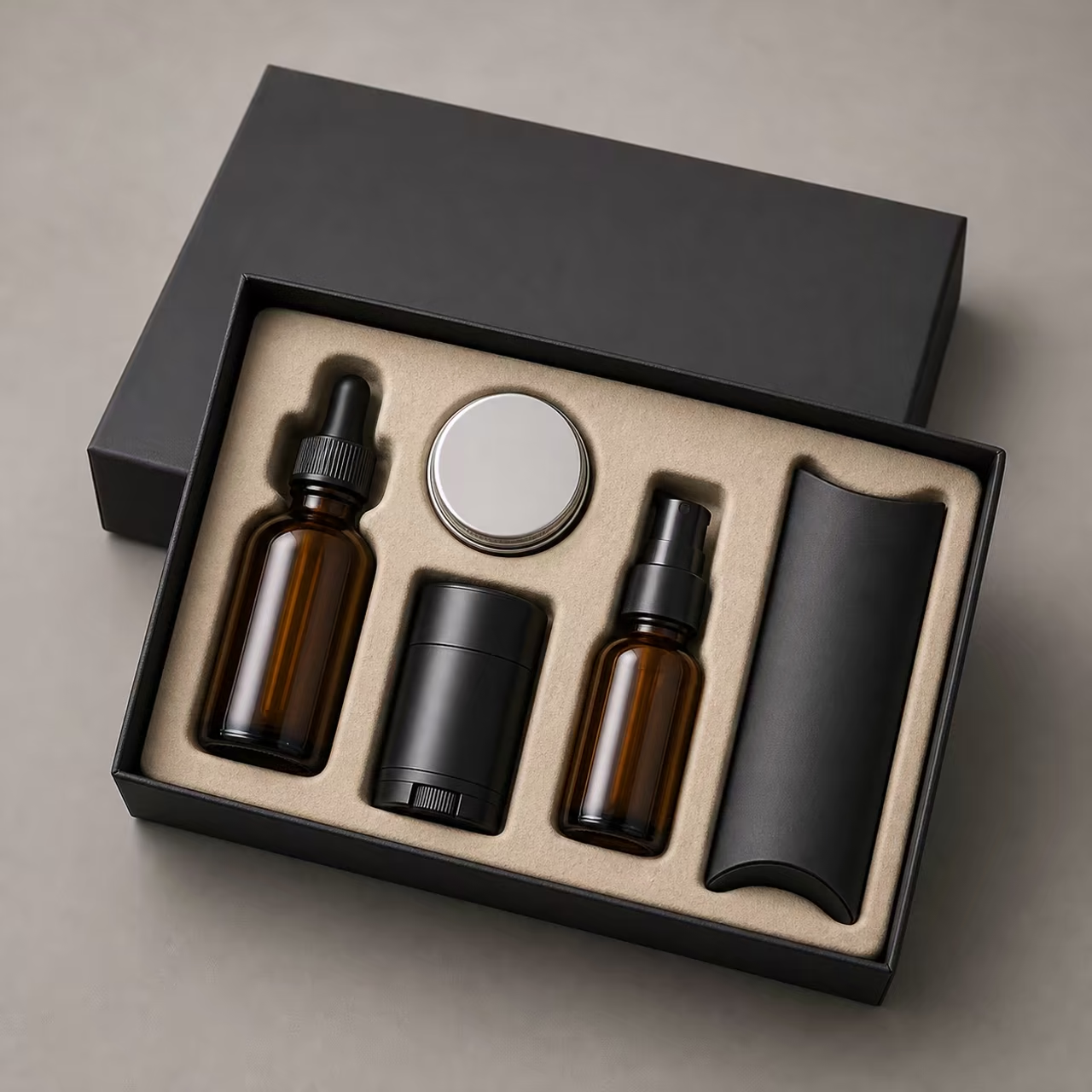
Start with a stock bottle when an existing production mold can meet the required capacity, neck finish and shape. Its applicable MOQ still depends on availability, glass color, closure, decoration, packing and destination. Move to a custom mold only when proprietary geometry or embossing is essential and the project can support tooling, pilot samples, production setup and repeat-order volume. Ask which specification sets the MOQ instead of treating one number as universal.
Three sourcing routes to compare
- Stock bottle and stock closure: usually the fastest route to samples and the lowest-risk way to validate capacity, neck finish, filling and packing. Availability and reorder continuity still need confirmation for the exact model.
- Stock bottle with custom decoration: keeps the proven bottle structure while adding coating, frosting, screen printing, hot stamping, decals or labels. The decoration process may introduce its own setup quantity and color-approval step.
- Custom bottle mold: supports a proprietary silhouette, embossing, debossing or project-specific geometry. It requires drawings, technical review, tooling, pilot samples and a production quantity that justifies the mold and line setup.
What can move the MOQ
Glass color, bottle weight, neck finish, closure, decoration coverage, artwork colors, carton configuration and destination can all change the feasible starting quantity. A bottle may be available, for example, while its requested cap or decoration needs a different production minimum. Treat the bottle, closure and finish as one quoted system.
Build a quote that can be compared
Ask suppliers to separate bottle, closure, decoration, tooling, samples and packing assumptions, and identify whether the quote uses current stock, a future run or a project-specific mold. For custom tooling, record who owns each mold, who may use it, how it is identified, stored and maintained, who pays for repair or replacement, and what happens if production moves. Unresolved terms should remain visible rather than being assumed.
Selection considerations
Use stock bottles to validate the pack architecture before committing to custom tooling when the shape is still flexible. If a proprietary form is essential, define capacity, target weight, neck finish, decoration area, filling constraints and case packing before the mold brief is frozen.
Questions to resolve before sampling
- Is a stock bottle acceptable, or does the brand require a proprietary shape or embossing?
- Which bottle, closure, decoration or packing step is likely to set the minimum quantity?
- Should the quote separate stock availability, tooling, decorated samples and bulk production assumptions?
What to send with an inquiry
Share the application or formula, capacity, material preference, closure or dispensing component, decoration, estimated quantity, destination country, target timing and any reference drawings or photos. Final specifications, MOQ, availability and testing requirements are confirmed for the selected configuration.
Primary references and scope
- ASTM glass-container standards index — Lists active methods covering glass-container sampling, internal pressure, thermal shock and polariscopic examination.
- ISO 2859-1:2026 acceptance-sampling overview — Defines AQL-indexed sampling schemes for lot-by-lot inspection by attributes.
- ASTM D4169 distribution testing overview — Provides a framework for evaluating shipping units against distribution hazards.
Technical standards can inform sampling and performance planning, but they do not set a supplier MOQ, mold charge or lead time. Those commercial inputs must be confirmed for the selected bottle, decoration, quantity and production route.