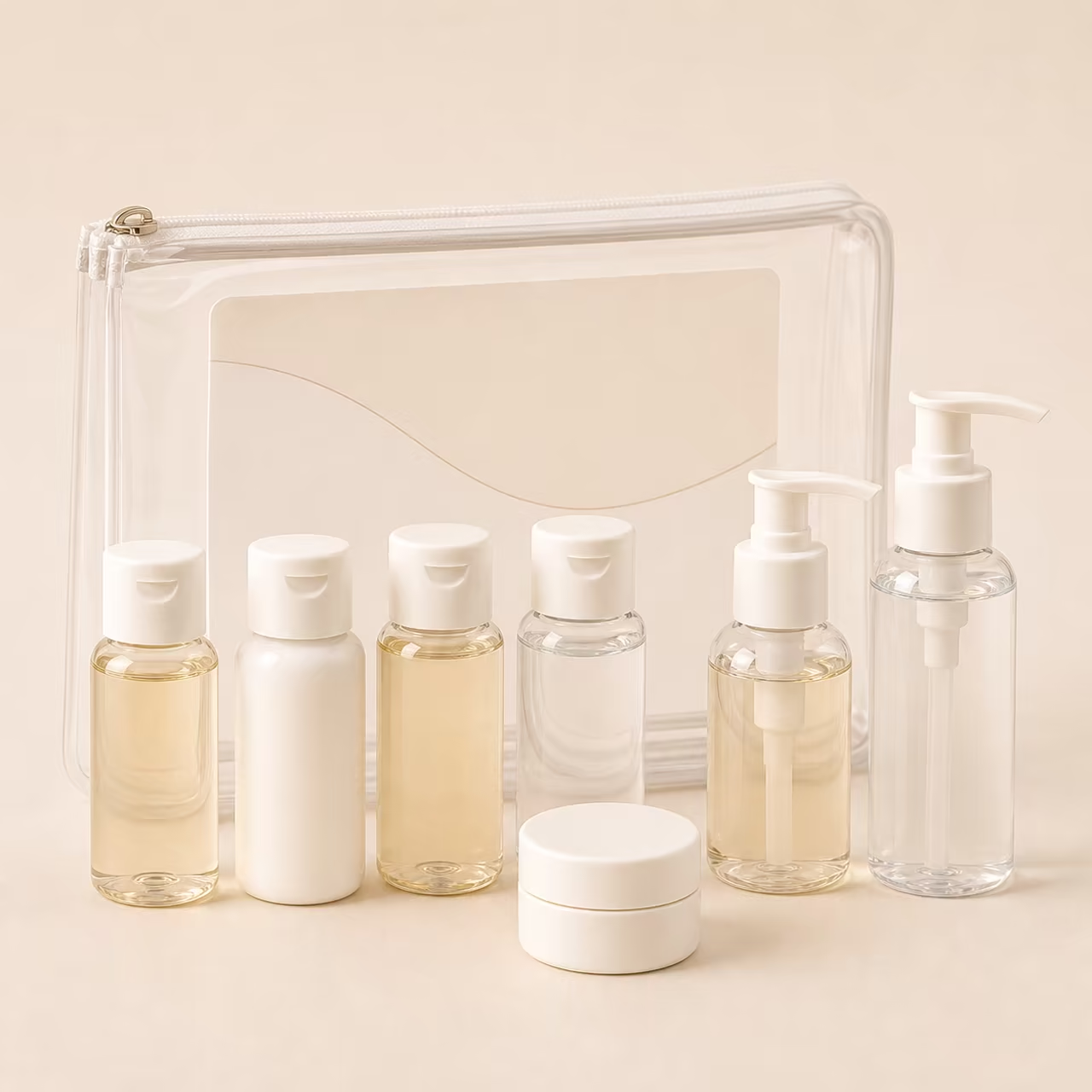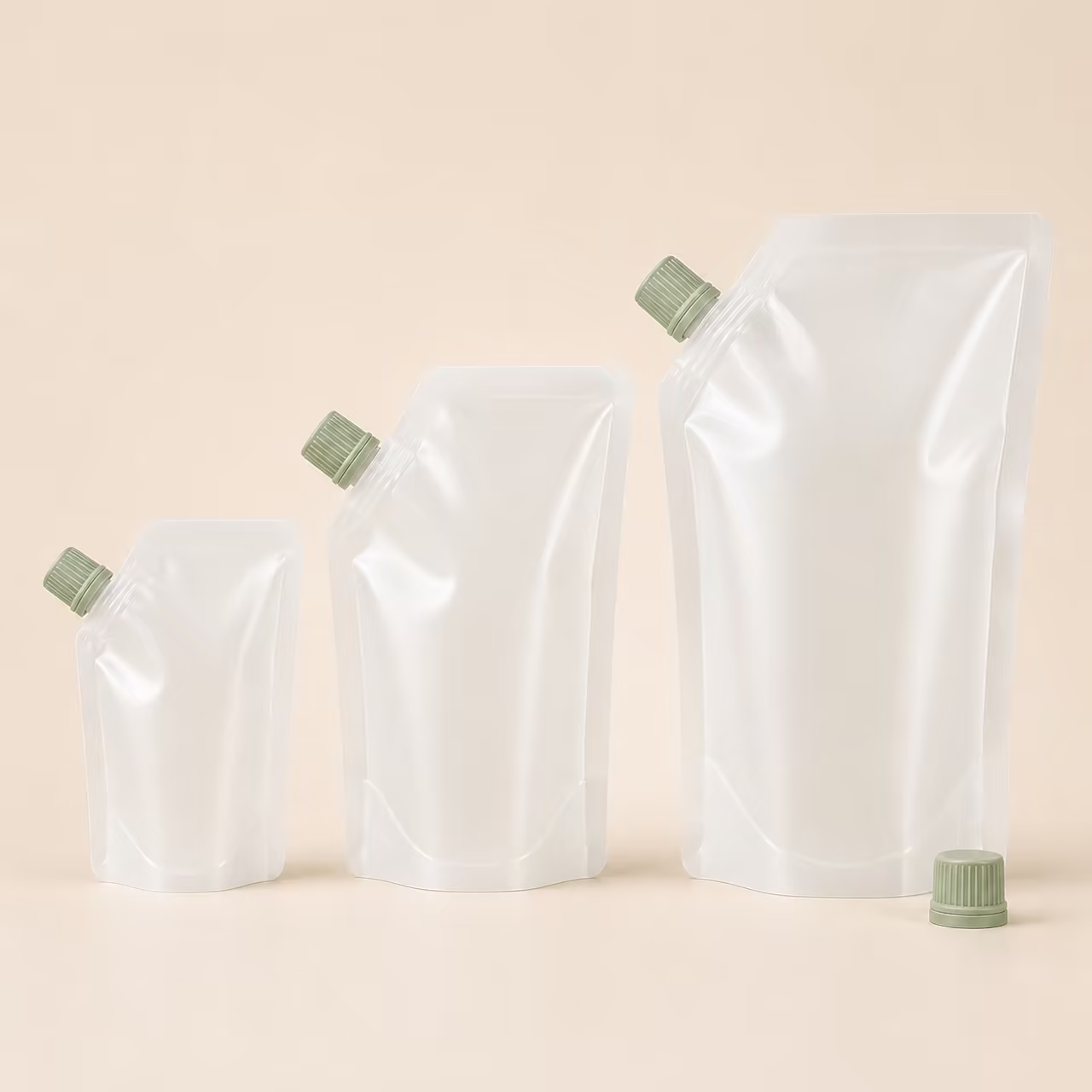
A refillable cosmetic package is not one lighter pouch placed beside a permanent bottle. It is a repeat-use system: the durable pack, refill unit, closure, transfer action, formula, consumer instructions, ecommerce packing and future supply all have to keep working together. If any link fails, the customer may spill product, keep buying a single-use format or own a reusable container that can no longer be refilled.
This guide turns the most common refill frustrations into sourcing requirements. It does not assume that one material or format is always better. The responsible brand must compare the complete system, validate it with the intended formula and qualify any environmental claim for the market where it is made.
Treat refill as a repeatable product system
Start with a system map rather than a pouch quotation. Define the reusable primary pack, refill capacity, number of intended cycles, transfer method, closure, label or identification method and how customers will obtain the next refill. Decide whether the refill replaces the formula only, an inner cartridge, or the formula and dispensing engine together.
Capacity matching matters. A refill that exceeds the bottle volume creates leftover product and storage questions; an undersized refill can make the reusable bottle look underfilled. Allow for the pack’s nominal capacity, target fill, headspace, pump displacement and the consumer’s ability to see when the old product has been used. Avoid instructing customers to mix old and new product unless the responsible formulation and quality teams have approved that use.
Compare material reduction without losing required functions
ISO 18602 frames packaging optimization around reducing weight or volume while maintaining the functions required of the packaging system. That is a useful discipline for refill projects. A very light refill that leaks, needs excessive secondary protection or cannot preserve the formula is not an optimized result.
Compare the durable pack, every refill unit, caps and pumps replaced during use, labels, cartons, transport packing and expected number of successful cycles. Document the baseline being compared. “Uses less plastic” needs a defined comparison, while “recyclable” depends on material design and the collection and processing reality addressed by the claim. A mono-material direction can simplify one design question, but local acceptance, barriers, inks, spouts, caps and residual product still matter.
Design the transfer and dispensing action together
For a spouted refill pouch, review formula viscosity, pouch stiffness, spout position, orifice, cap grip and the opening of the reusable bottle. Users should be able to align the parts, control flow and stop without the pouch collapsing unpredictably or product covering the grip area. A funnel may help one formula but adds another component to store and clean.
Cartridges and pods need clear orientation, insertion, lock confirmation and removal. Test whether the dispensing engine is reused or replaced and whether the customer can touch an exposed product path. The assembled refill packaging system should deliver an accepted dose after each change, not merely fit together when empty.
Protect hygiene and formula compatibility
The refill action changes the contamination and contact-material assumptions. Evaluate the intended formula in every component it touches, including pouch film, spout, cap, cartridge, gasket, reusable bottle and dispensing path. The responsible technical team should define whether the bottle is cleaned, dried, returned, reused immediately or never opened to the environment.
Instructions must match the validated system. “Rinse and refill” can introduce water, residue or household cleaning products unless that process has been assessed. For water-containing cosmetics, preservation, manufacturing controls and repeated consumer handling require particular attention. Production-intent compatibility and microbiological evaluation belong in the project plan rather than being inferred from a material name.
Test distribution and repeated use
Test filled refill units and the reusable pack through the actual sales route. Review seal integrity, spout compression, cap loosening, flex cracking, abrasion, temperature exposure and movement inside the shipping carton. A pouch that passes an upright bench check can still leak when an ecommerce parcel compresses the spout.
Then run repeated-use trials. Record opening and closing force, clean transfer, spills, priming, output, leakage, label durability, product buildup and component wear across the intended cycles. Include wet or oily hands and users who have not been coached. Keep failed samples and compare them with approved controls before changing a component.
Plan refill continuity before launch
A reusable pack only has continuing value if compatible refills remain available. Record item codes, interfaces, dimensions, materials and change-control requirements. Ask which component sets are stock, which depend on a custom mold and how a replacement supplier or revised decoration would be qualified.
Plan how the customer identifies the correct refill and how the brand communicates a discontinuation or format change. Proprietary cartridges can improve the insertion experience but increase lock-in. Open pour systems may allow more flexibility but place more responsibility on transfer instructions and formula identification.
Make claims from evidence, not format names
FTC guidance for U.S. environmental marketing emphasizes clear qualifications and substantiation. Do not assume “refillable,” “reusable,” “zero waste” or “100% recyclable” is self-proving. State what is refilled, what remains reusable, the conditions needed, and the comparison behind any reduction figure. Destination-market rules may differ.
The best refill brief combines system performance and claim evidence: a defined baseline, bill of materials, intended cycles, test results, consumer instructions and realistic availability. That makes the refill a product customers can keep using rather than a launch-only sustainability story.
Refill system qualification matrix
Approve the components and repeat-use journey as one system. A lighter refill unit cannot compensate for a transfer, hygiene, supply or distribution failure.
| System area | Requirement to define | Evidence before launch |
|---|---|---|
| Reusable primary pack | Capacity, material, dispensing path, intended cycles and what remains in service. | Production-intent specification plus repeated opening, dispensing, wear and cleaning evaluation. |
| Refill unit | Formula-contact structure, capacity, barrier, spout or cartridge interface, cap and fill process. | Compatibility, sealing, fill and normal-use evacuation results for the exact refill construction. |
| Transfer action | How users open, align, pour or insert, stop flow and confirm a secure fit. | Observed trials with representative users, wet or oily hands and spill or error records. |
| Hygiene and use | Whether the durable pack is opened, cleaned, dried, mixed with residual product or touched internally. | Instructions supported by formulation, microbiological and repeated-use review. |
| Distribution and storage | Orientation, temperature, ecommerce restraint, spout loading and secondary containment. | Filled-system distribution plan, controls and documented failure acceptance criteria. |
| Continuity and claims | Compatible refill availability, change control, comparison baseline and destination-market wording. | Item-code continuity plan and substantiation file for each refill, reuse or reduction claim. |
Selection considerations
Treat the durable pack, refill unit, transfer action, formula, dispensing path, instructions and reorder continuity as one system. Compare material use against a defined baseline, then confirm that every claimed refill cycle can preserve containment, handling and communication functions under realistic use and distribution conditions.
Questions to resolve before sampling
- What stays reusable, what is replaced, and how many successful cycles is the brief designed to support?
- Can users transfer the actual formula cleanly without touching an exposed product path or mixing unintended residue?
- How will the brand keep compatible refills available and substantiate each environmental claim in the destination market?
What to send with an inquiry
Share the application or formula, capacity, material preference, closure or dispensing component, decoration, estimated quantity, destination country, target timing and any reference drawings or photos. Final specifications, MOQ, availability and testing requirements are confirmed for the selected configuration.
Primary references and scope
- ISO 18603:2013 packaging reuse overview — Defines requirements and assessment procedures for packaging intended to be classified as reusable.
- ISO 18602:2013 packaging-system optimization overview — Describes assessment of packaging weight or volume while preserving required packaging functions.
- ISO 18604:2013 material-recycling overview — Defines assessment requirements for packaging intended to be recoverable through material recycling.
- FTC environmental claims summary — Explains qualification and substantiation considerations for recycled-content, recyclable and refillable claims in the U.S.
- FDA microbiological safety and cosmetics — Explains contamination risks, including packaging that does not adequately protect a cosmetic product.
Reuse, refill, optimization, recycling and environmental claims require a functioning system and support appropriate to the destination market. These references do not establish formula compatibility, local recycling access or the environmental benefit of a particular GloryStarPack configuration.