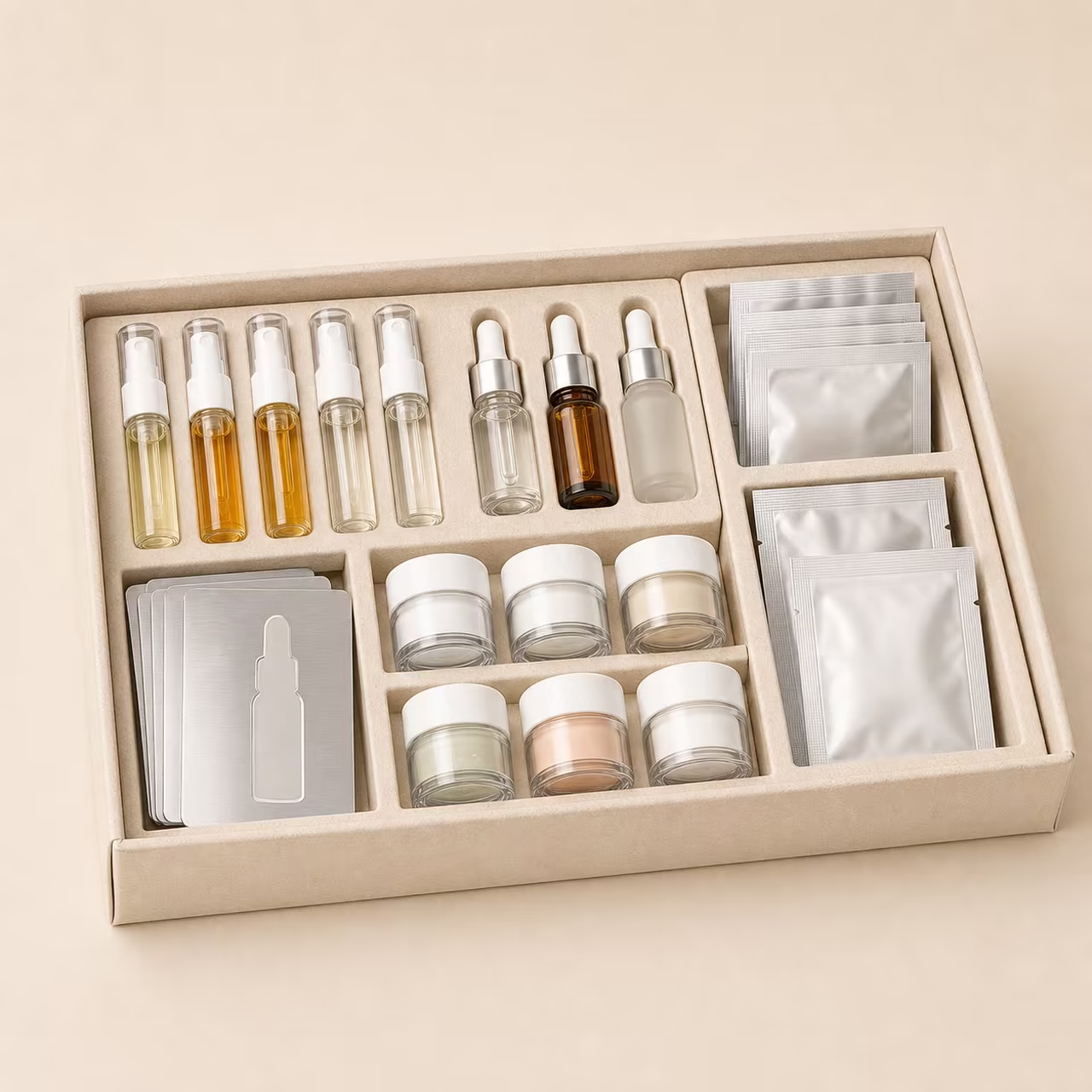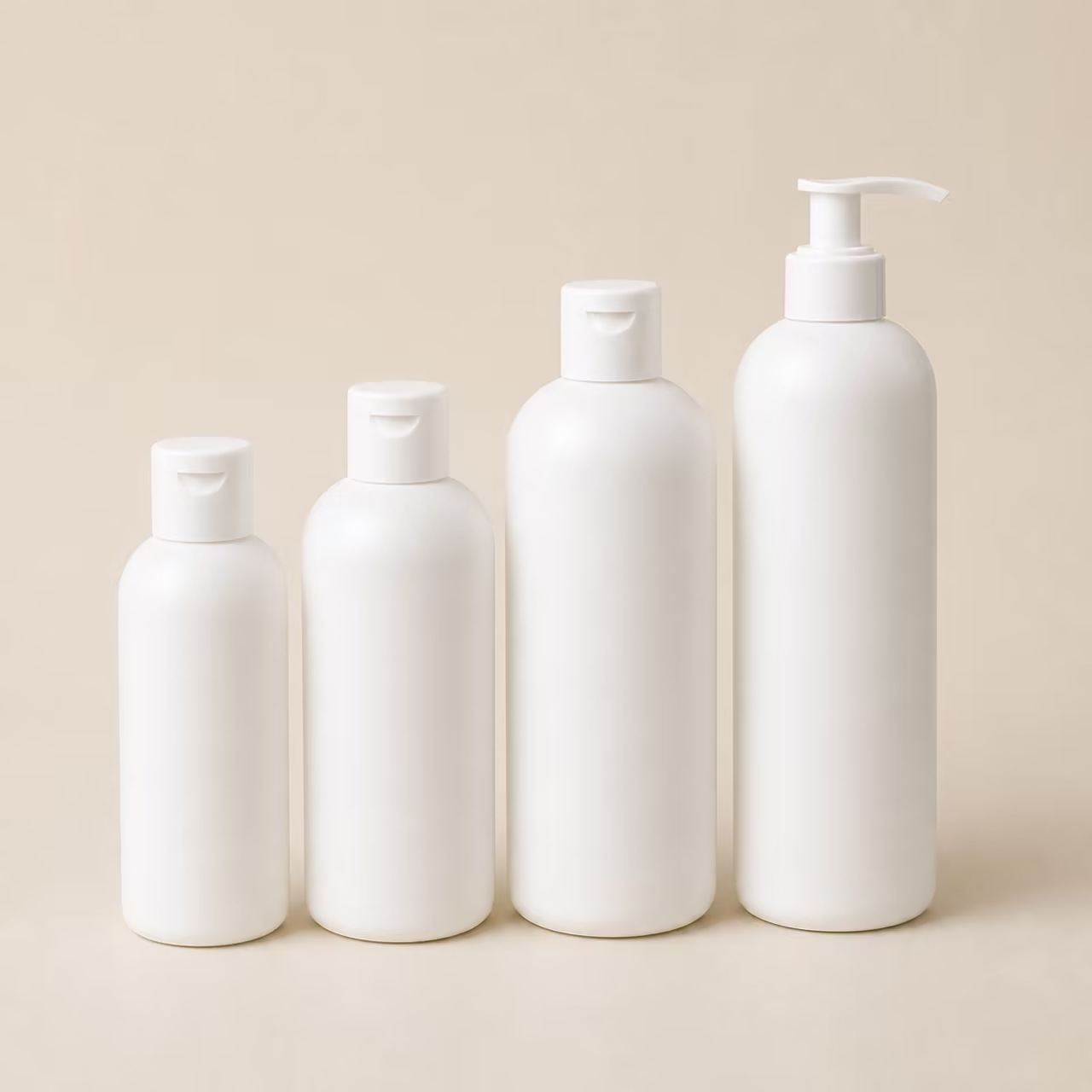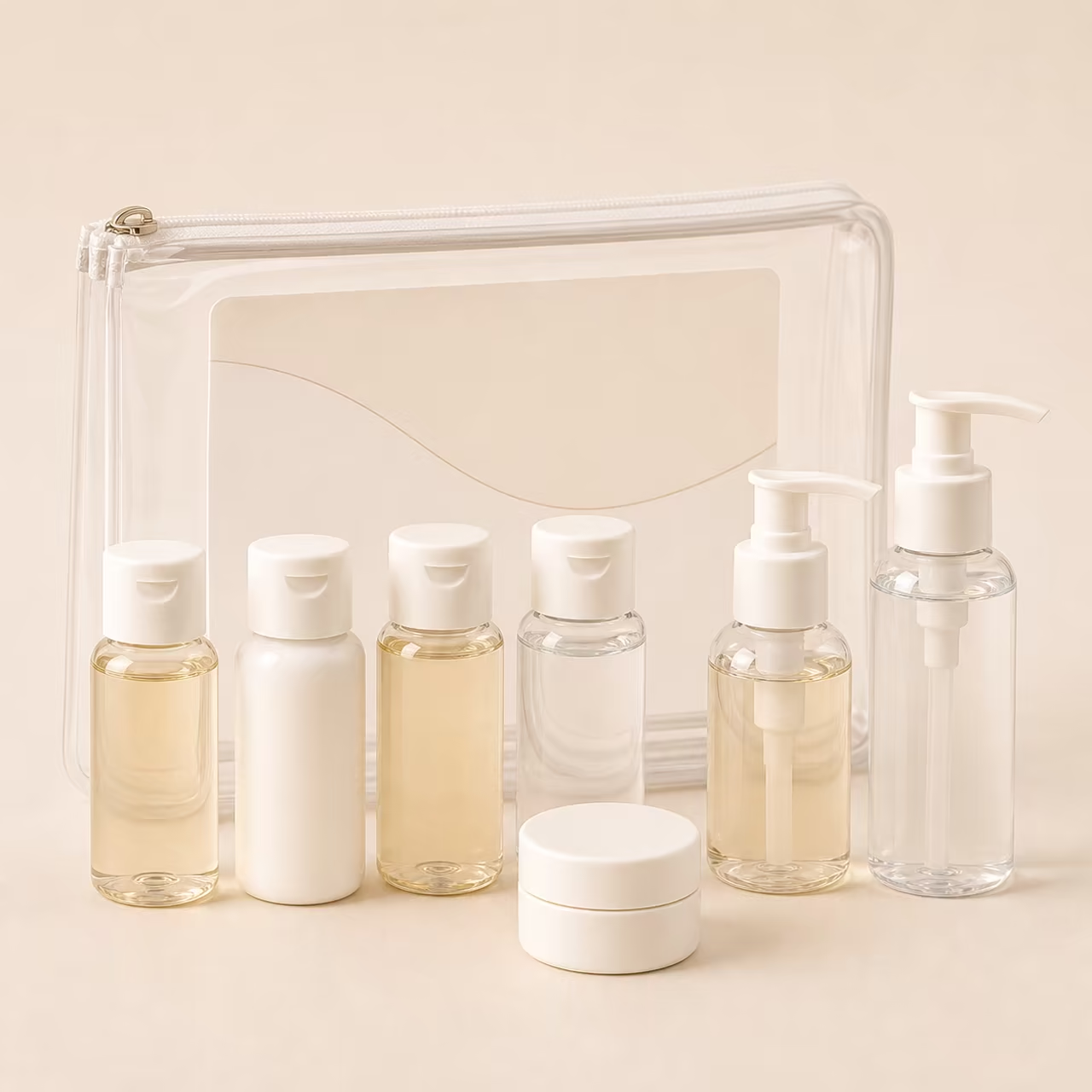
Hotel amenity packaging is no longer a simple choice between a small shampoo bottle and a large dispenser. Guests judge cleanliness, ease of use and product identity at the shower wall. Housekeeping teams need a safe, fast and traceable replenishment process. Operators must also manage leakage, formula compatibility, inventory and destination-market rules.
Recent traveler discussions show why the operating details matter. Some guests distrust a dispenser they believe can be opened or contaminated; others dislike wasteful single-use minis or a pump that is empty, clogged or difficult to reach. The packaging brief should translate those concerns into controls that the hotel can demonstrate instead of assuming that one format automatically feels hygienic or sustainable.
Choose the operating model before the container
Map what the guest uses and what housekeeping handles. A program may use sealed cartridges in wall-mounted dispensers, removable refillable bottles, bulk product connected to a fixed pump, or individual mini bottles and sachets. Define who fills or replaces each unit, where that work happens, how the formula and lot are identified, and what happens when a component is damaged.
The same property may need more than one route. Standard rooms may use dispensers while suites, spas, gyms or accessibility requests need individual formats. Build one controlled bill of materials and visual identification system so shampoo, conditioner, body wash and lotion cannot be confused during replenishment.
Separate hygiene controls from guest perception
A dispenser can reduce individual containers, but a reusable reservoir creates cleaning, opening and refill questions. Decide whether housekeeping replaces a sealed cartridge, swaps a prefilled bottle or pours bulk product into an existing container. Record whether the product path is opened, whether old and new lots can mix, and how the reservoir and pump are inspected.
Tamper resistance and visible status can affect trust. A keyed bracket, sealed cartridge, breakable indicator or controlled back-of-house closure may help, subject to the actual design. Guests should be able to identify the product and see whether the unit is functional without manipulating the mount. Claims such as “tamper-proof” or “contamination-free” need evidence and should not be inferred from a locked appearance.
Design the housekeeping refill workflow
Time the complete task: identify the product, unlock or remove the unit, check the residual amount, replace or refill, close, clean the exterior, confirm pump output and record the action. Include wet gloves, limited cart space and the risk of placing a cap or pump on an unclean surface. Color can support identification but should not be the only cue.
If product is poured from a refill pouch or bulk jug, review spout control, container opening, spill recovery and lot traceability. The responsible operator should define whether topping up is allowed. Mixing different lots or formulas can complicate traceability and product-quality controls even when the products look similar.
Qualify the dispenser and formula together
Test the actual shampoo, conditioner, body wash or lotion through the intended pump at relevant bathroom temperatures. Record priming, output, actuator force, dripping, clogging, product buildup and evacuation. A high-viscosity conditioner may require a different engine or product path than hand wash.
Review every contact material, including reservoir, cartridge film, dip tube, valves, gasket, spring location and nozzle. Repeated cleaning agents and exterior bathroom chemicals can also affect labels, coatings, brackets and plastics. Freeze item codes and approved cleaning instructions so an apparently similar replacement does not change performance.
Test mounting, leakage and guest use
Evaluate the mounted system with the filled weight and repeated actuator loads. Check bracket retention, bottle removal, sharp edges, drainage and whether the pump can be reached from the intended position. Include guests with limited grip or reach and users who cannot rely on color alone. Clear product names and tactile or positional cues can reduce mistakes.
For individual minis, review cap retention, squeeze force, opening with wet hands, label legibility and product left in the pack. Test the complete amenity tray, pouch or carton through distribution and room setup. Secondary containment can reduce the consequence of a leak but should not replace a functional closure.
Compare material and service impacts as a system
Do not compare one empty mini bottle with one empty dispenser. Include the durable mount, reservoirs or cartridges, pumps replaced during service, refill units, transport cases, cleaning materials, product loss and the number of occupied room nights supported. A lighter component may need more protection or fail more often.
ISO reuse principles require a functioning system, not merely a container capable of being refilled. The EU Packaging and Packaging Waste Regulation also contains restrictions affecting certain single-use accommodation packaging; implementation, exceptions and timing must be checked for the property and market. Avoid broad “zero waste” claims when pumps, cartridges, labels or contaminated residual product still enter a waste stream.
Build confidence through visible operations
Guest communication should explain the format without making unsupported hygiene or environmental promises. Product identity, directions and required labeling must remain legible. A visible seal or service indicator is useful only when staff understand what it means and replace the unit when the indicator changes.
The final approval record should define the guest-facing pack, back-of-house refill, formula, pump output, mounting hardware, cleaning and refill method, service interval, lot-control process, test results and contingency for failures. That turns a dispenser from a decorative sustainability feature into an amenity system the hotel can operate consistently.
Hotel amenity operating-model comparison
Choose the format with the complete guest-room and housekeeping process in view. Container weight alone does not establish hygiene, trust, usability or environmental performance.
| Operating model | Operational advantage | Qualification focus |
|---|---|---|
| Sealed cartridge dispenser | Housekeeping replaces a closed product unit with limited pouring at the property. | Cartridge identity, lock and seal status, pump output, residual product, mount retention and supply continuity. |
| Prefilled removable bottle | A controlled bottle can be filled off-room and exchanged during service. | Bottle traceability, transport cap or lock, cleaning boundary, bracket fit and swap confirmation. |
| Pour-refilled reservoir | Bulk product can reduce the number of individual guest units. | Opening control, topping-up policy, lot traceability, spill prevention, cleaning and pump-path inspection. |
| Individual mini bottle | Sealed single-guest format with familiar identification and portable use. | Cap retention, wet-hand opening, fill and label, evacuation, room setup and distribution leakage. |
| Sachet or wrapped solid | Compact single-use format for a defined dose or amenity action. | Seal, tear and dispensing experience, labeling route, secondary containment and applicable market restrictions. |
| Hybrid property program | Different room, spa, gym or accessibility needs can use controlled formats under one system. | Formula naming, shared design cues, inventory, staff training, exception handling and consistent records. |
Selection considerations
Qualify the visible guest pack and invisible service workflow together. The dispenser or mini must support clear formula identity, appropriate hygiene controls, wet-hand access and reliable output, while housekeeping needs a traceable way to replace or refill, inspect, clean and respond to a failed unit without mixing products or lots unintentionally.
Questions to resolve before sampling
- Will housekeeping replace a sealed cartridge, swap a controlled bottle or pour product into an open reservoir?
- How will staff identify formula and lot, prevent unintended topping-up and confirm that the pump is functional?
- Which guest trust, accessibility, leakage, mounting and destination-market requirements must the system satisfy?
What to send with an inquiry
Share the application or formula, capacity, material preference, closure or dispensing component, decoration, estimated quantity, destination country, target timing and any reference drawings or photos. Final specifications, MOQ, availability and testing requirements are confirmed for the selected configuration.
Primary references and scope
- Regulation (EU) 2025/40 on packaging and packaging waste — Sets lifecycle, reuse, refill and waste-prevention requirements, including provisions for accommodation-sector single-use toiletries.
- ISO 18603:2013 packaging reuse overview — Defines requirements and assessment procedures for packaging intended to be classified as reusable.
- FDA cosmetic GMP guidelines and inspection checklist — Covers control, storage and records for raw and primary packaging materials.
- FDA microbiological safety and cosmetics — Explains contamination risks, including packaging that does not adequately protect a cosmetic product.
- ISO 11156 packaging accessible-design overview — Provides a framework for packages that more people can identify, handle, use, separate and dispose of.
Accommodation-sector restrictions, implementation dates, exceptions, hygiene duties and cosmetic requirements vary by market and operating model. These sources do not certify a hotel dispenser as hygienic, tamper-proof, reusable or accessible; validate the complete guest-room and back-of-house process.