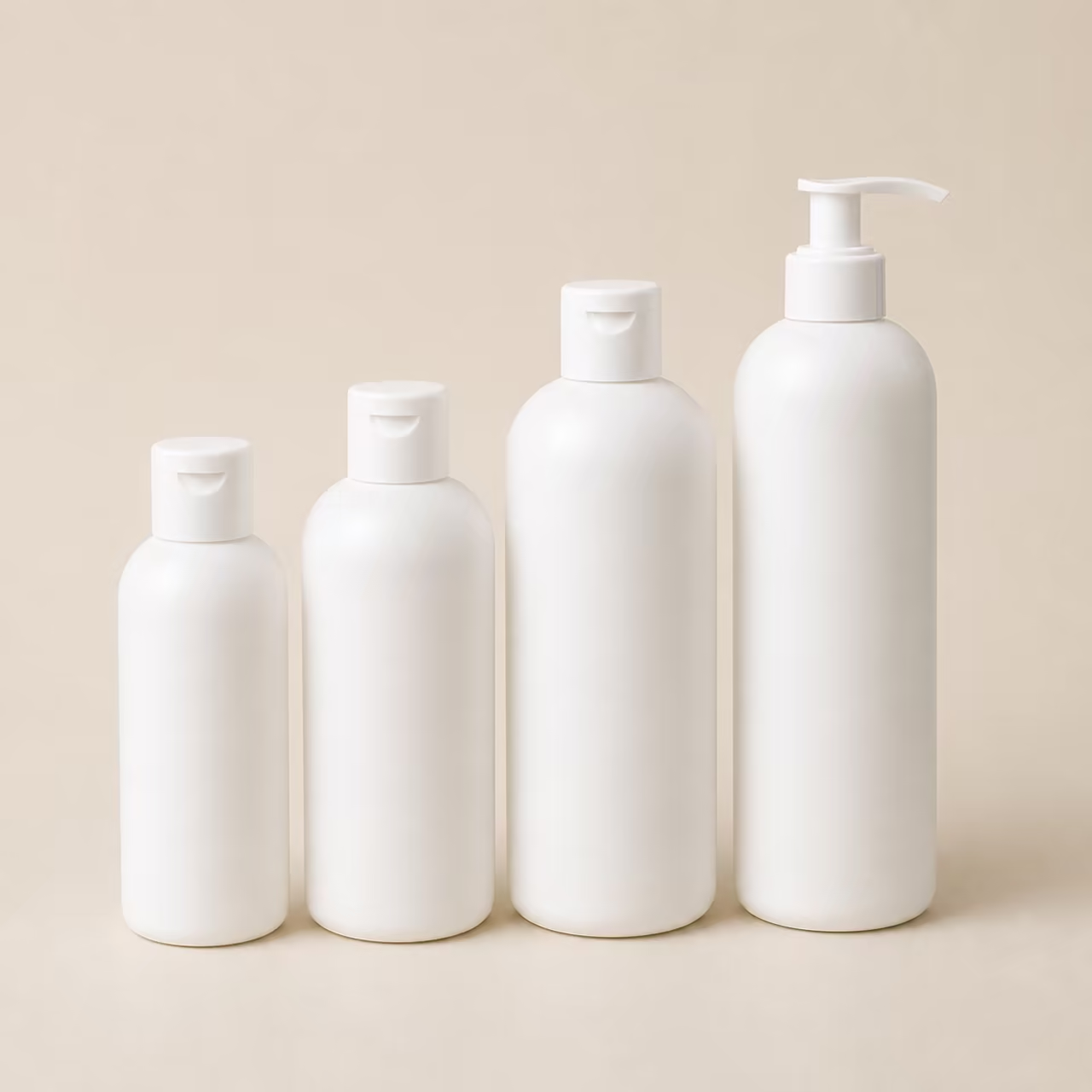
Product route: 250ml to 750ml PCR HDPE shampoo bottle family. Use the commercial product page to compare the published capacity and closure directions; use this guide to define recycled-content evidence and approval controls.
PCR plastic cosmetic packaging can reduce the amount of virgin resin used in a bottle, but “made with recycled plastic” is not a complete purchasing specification. A sourcing team still needs to define the recycled-content percentage, the component to which that percentage applies, the resin and color route, the formula, the closure and the evidence behind any claim.
Beauty buyers also need a realistic production standard. Post-consumer recycled resin may introduce more visible variation than a comparable virgin-resin route. That variation is not automatically a defect, but it should not be left to interpretation after thousands of bottles arrive. The approved sample, written tolerances and lot records must establish what the brand will accept.
Define PCR content at component level
Start by mapping the full pack: bottle, cap or pump, liner, label, color concentrate, decoration and secondary packaging. State the target recycled-content percentage for each component rather than applying one broad number to the assembled package. If only the bottle contains PCR, the marketing and purchasing language should say so clearly.
Request a supplier declaration that identifies the resin, grade, recycled-content basis and production item. Record whether the percentage is calculated by component weight and whether additives, color concentrate or other layers are included in the denominator. The responsible brand must choose the evidence needed for its market and claim; appearance alone cannot verify recycled content.
Approve a practical visual standard
PCR HDPE can show variation in base color, opacity, specks, odor or surface texture. The result depends on the resin stream, filtration, blend, pigment and molding process. Natural or light colors generally reveal variation more readily than darker colors, while a heavy pigment can make a bottle look uniform without proving anything about the resin composition.
Use samples from a production-representative material route, not only a hand-selected showroom piece. Review bottles under agreed lighting and against a signed limit sample or measurable color range where appropriate. Define how the team will classify contamination, black specks, streaks, sink marks, flash and cosmetic scuffing. A sustainability narrative should not become permission for uncontrolled appearance.
Check bottle mechanics after the material change
A PCR blend can affect stiffness, impact behavior, stress response and process consistency. Confirm wall distribution, nominal bottle weight and the expected squeeze-and-recovery feel for the intended use. A shampoo bottle must dispense comfortably without paneling in storage, while a refill jug or large lotion bottle may need more top-load and handle confidence.
Evaluate filled production-intent bottles for drop performance, base stability, sidewall deformation, closure retention and packed compression. Condition and test around the actual distribution route rather than copying a generic pass claim. If the PCR percentage, resin source, pigment or bottle weight changes, decide whether mechanical and compatibility checks must be repeated.
Qualify the bottle, formula and closure together
“HDPE compatible” is not a final conclusion for a cosmetic formula. Fragrance, oils, surfactants, colorants and other ingredients can affect the bottle, closure, liner, label or decoration. Test the intended formula in the exact PCR construction and production color, including relevant storage orientations and temperatures selected by the responsible technical team.
Match the neck and sealing surface to the final disc cap, flip-top, pump or reducer. Record application torque where relevant, hinge function, opening force, leakage, pump priming, output and dip-tube length. A cap made from virgin resin may perform differently from a PCR bottle even when each component works separately; approve the assembled system.
Confirm decoration and label adhesion
Surface energy, mold release, texture and formula exposure can affect labels, inks and coatings. Review label edge lift, adhesive ooze, wrinkling, print opacity, rub resistance and color contrast on the selected bottle surface. Filled-product weight and repeated squeezing may reveal failure that is not visible on an empty rigid sample.
Freeze the surface treatment, label stock, adhesive, ink or decoration process with the approved resin and color route. If the brand accepts visible PCR variation, make sure required text and barcodes remain legible across that range.
Plan supply continuity and change control
Ask whether the PCR grade is supported by a stable source, a supplier-controlled blend or spot availability. Define which changes require notification: recycled-content percentage, resin supplier, color concentrate, bottle weight, mold, closure, label or manufacturing location. Recycled-resin availability can shift, so a contingency should state whether the brand will accept a different shade, a revised blend or a temporary virgin-resin route.
Keep purchase specifications, declarations, approved samples, test results and lot traceability together. This file supports repeat orders and gives marketing, procurement and quality teams the same facts. It is more useful than a generic certificate disconnected from the exact item being purchased.
Write environmental claims narrowly
FTC guidance for U.S. environmental marketing distinguishes recycled content from recyclability and emphasizes clear qualification and substantiation. A bottle can contain PCR without being accepted in every local recycling program. Likewise, a recyclable bottle claim may depend on the closure, label, color, residue and collection context addressed by the statement.
State what component contains how much post-consumer recycled material, define the comparison behind any reduction statement and check destination-market requirements. Avoid phrases such as “zero waste,” “fully sustainable” or “100% eco-friendly” unless the responsible team can support exactly what consumers are likely to understand. A credible PCR project connects documented material content with a package that still protects, dispenses and ships the product successfully.
PCR cosmetic packaging approval matrix
Approve recycled content, package performance and claim wording together. A PCR declaration does not by itself establish visual consistency, formula compatibility, recyclability or filled-pack performance.
| Approval area | Requirement to define | Evidence before bulk production |
|---|---|---|
| Recycled-content scope | Percentage, basis, resin grade and exact bottle, cap or pump component covered. | Item-specific supplier declaration and purchasing specification linked to the production version. |
| Appearance standard | Permitted color, opacity, odor, specks, streaks, surface texture and cosmetic defects. | Production-representative samples, signed limits and measurable color range where appropriate. |
| Bottle mechanics | Weight, wall distribution, squeeze recovery, panel resistance, impact and base stability. | Conditioned production-intent bottle results with documented acceptance criteria. |
| Closure and formula system | Neck, seal, torque, hinge or pump performance plus every formula-contact component. | Filled-package compatibility, leakage, dispensing and relevant storage-orientation evidence. |
| Decoration and labeling | Surface treatment, adhesive, ink, barcode contrast and resistance to squeeze and formula exposure. | Decorated filled samples reviewed across the accepted PCR appearance range. |
| Continuity and claims | Material change control, lot records, contingency route and destination-specific wording. | Traceability file and substantiation for each recycled-content, reduction or recyclability statement. |
Selection considerations
Define recycled content for each component and link the supporting declaration to the production item. Then approve the accepted color and surface range, bottle weight, wall distribution, squeeze recovery, closure, formula, decoration and filled-pack tests. PCR content and recyclability are separate claims, and neither should be inferred from the bottle appearance.
Questions to resolve before sampling
- Which exact component contains PCR, what percentage applies and what item-specific evidence will support that statement?
- What appearance, squeeze recovery, panel stability, closure and filled-package limits should production samples establish?
- How will changes to resin source, blend, color, bottle weight, closure or decoration trigger notification and reapproval?
What to send with an inquiry
Share the application or formula, capacity, material preference, closure or dispensing component, decoration, estimated quantity, destination country, target timing and any reference drawings or photos. Final specifications, MOQ, availability and testing requirements are confirmed for the selected configuration.
Primary references and scope
- FTC environmental claims summary — Explains qualification and substantiation considerations for recycled-content, recyclable and refillable claims in the U.S.
- ISO 14021:2026 environmental claims overview — Describes requirements and guidance for self-declared environmental statements used on products, packaging and digital materials.
- ISO 18602:2013 packaging-system optimization overview — Describes assessment of packaging weight or volume while preserving required packaging functions.
- ISO 18604:2013 material-recycling overview — Defines assessment requirements for packaging intended to be recoverable through material recycling.
- FDA cosmetic GMP guidelines and inspection checklist — Covers control, storage and records for raw and primary packaging materials.
- Regulation (EU) 2025/40 on packaging and packaging waste — Sets lifecycle, reuse, refill and waste-prevention requirements, including provisions for accommodation-sector single-use toiletries.
A PCR percentage, recyclability statement or broader environmental claim should be supported and qualified for the exact product, component and destination market. These references do not certify any GloryStarPack bottle, formula compatibility, local collection access or recycling outcome.