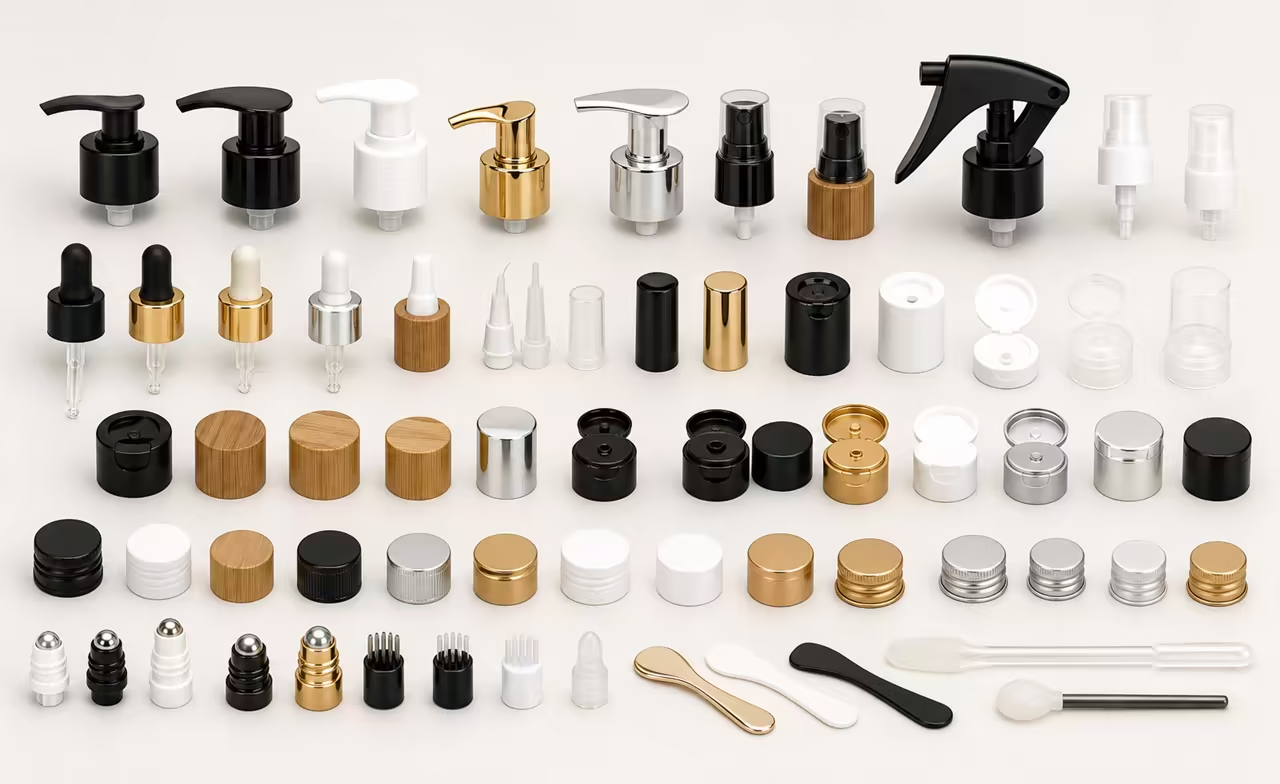
Lip gloss and mascara packaging is a dispensing system, not a decorative tube with a wand added later. The container neck, wiper, stem, applicator, cap, formula viscosity and fill level together control pickup, wipe-off, dose, application and sealing. A visually attractive component can still leak into the cap, overload the applicator, crack at the neck or let the product dry prematurely.
Recent beauty-community complaints make the failure modes concrete: squeeze tubes breaking near threaded necks, gloss or concealer collecting inside caps, doe-foot assemblies separating and mascara packaging delivering too much or too little product. A buyer does not need to copy individual anecdotes into a specification. The useful step is to convert them into production-intent tests and acceptance criteria.
Start with formula and use action
Define whether the product is a low-viscosity lip oil, tacky gloss, pigmented liquid lip, mascara, brow gel or treatment. Record target dose, application area, desired pickup and whether the customer is expected to re-dip the wand. The same tube and applicator can behave very differently with two formulas that look similar in a beaker.
Use the production-intent formula whenever possible. Early surrogate trials can screen geometry, but final approval should account for viscosity over time, pigments, fibers, volatile ingredients, oils and the intended fill process. The responsible formulation and quality teams also need to assess product safety, preservation and destination-market requirements.
Match the tube, neck and closure
For a rigid lip gloss or mascara package, identify the tube and neck drawing, cap thread or locking interface, stem length, seal and wiper retention. Check that the applicator reaches the intended product zone without bottoming out or leaving excessive inaccessible product. Filled weight and headspace can influence leakage and the amount presented on first opening.
Threaded squeeze lip tubes need their own stress review. Confirm shoulder and neck geometry, cap engagement, application torque, opening force and what happens when users repeatedly tighten the cap or squeeze while the closure is partially engaged. Drop, flex and over-torque trials can reveal cracking around the neck or thread root before launch.
Use the wiper to control pickup and dose
The wiper removes product from the stem and applicator as the wand is withdrawn. Its opening, lip geometry, hardness, retention and interaction with the formula influence how much product remains on the applicator and how much gathers around the neck. A smaller opening does not simply mean a cleaner dose; it can raise withdrawal force, scrape the applicator unevenly or pull the wiper from its seat.
Compare candidate wipers with the final stem and applicator. Record first withdrawal, later withdrawals, product on the stem, dose consistency, neck cleanliness and reinsertion. Test after relevant storage because formula viscosity and wiper behavior can change with temperature or product aging.
Select the wand for the intended application
A doe-foot, flocked paddle, brush, comb or molded mascara wand should be selected around coverage, precision, product load and user control. Check applicator material, dimensions, flexibility, attachment to the stem and whether edges contact the neck or wiper. For eye-area products, the responsible team must resolve safety and intended-use requirements; a shape that looks precise in a drawing is not proof of suitable performance.
Observe representative users rather than only trained evaluators. Include different withdrawal angles, repeated wiping on the neck, reinsertion and normal force. Record loose fibers, applicator separation, stem bending and cap contamination. If the wand is changed, repeat the system trial rather than assuming the same wiper remains acceptable.
Investigate leakage and cap contamination
Product inside a cap may come from several paths: an incomplete seal, formula carried on the stem, excess dose wiped onto the neck, filled-product expansion, a package stored horizontally, or impact during transport. Diagnose the location and timing instead of describing every issue as a “leaking tube.”
Test filled packages in upright, side and inverted orientations selected for the sales route. Include relevant temperature cycling, vibration or parcel distribution conditions and repeated consumer opening. Inspect the sealing interface, wiper seat, neck, cap interior, stem and outer package separately. Secondary bags may contain a mess but do not validate the primary package.
Check dry-out, compatibility and product protection
Mascara and some lip products can change if volatile ingredients escape or the closure does not reseal consistently. Track mass change, viscosity, application performance, odor, component appearance and opening behavior over the protocol selected by the responsible technical team. Examine the cap seal and neck cleanliness after realistic repeated use, not just immediately after filling.
Review formula contact with the tube, wiper, stem, applicator adhesive or attachment, gasket and decoration. Look for swelling, softening, cracking, discoloration, delamination, odor transfer and decoration attack. One generic resin name does not establish compatibility for every colorant, additive or production process.
Freeze a complete component approval record
The approved specification should identify the exact tube, wiper, stem, applicator, cap, seal, formula, fill, decoration and carton. Include drawings or item codes, material and color versions, target torque or closing condition, test method, sample date and accepted limits. Record which substitutions require reapproval.
For purchasing, quote the full component set and clarify which parts share tooling or minimum quantities. A supplier may offer many wands and caps, but availability does not mean every combination is technically matched. The strongest brief turns consumer complaints into measurable controls: neck strength, seal integrity, wiper retention, dose, withdrawal force, applicator attachment, dry-out and filled-pack distribution performance.
Lip gloss and mascara component matrix
Select each component around formula, dose and use action, then validate the filled assembly. Similar-looking tubes, wipers and wands should not be treated as interchangeable.
| Component | Role in the system | Approval focus |
|---|---|---|
| Rigid tube and neck | Contains the formula and provides the wiper seat, seal and closure interface. | Drawing, fill, headspace, neck and seal integrity, orientation, impact and formula compatibility. |
| Squeeze lip tube | Supports direct or applicator-tip dispensing through a threaded shoulder and cap. | Neck stress, thread engagement, over-torque, repeated squeeze, drop, sealing and clean dispensing. |
| Wiper | Controls stem cleanliness, product pickup, dose and withdrawal force. | Opening and lip geometry, material, retention, temperature response and formula-specific wipe-off. |
| Stem and applicator | Carries and places the intended dose on lips, lashes or brows. | Length, flexibility, attachment, application control, loose fibers, separation and neck contact. |
| Cap and seal | Closes the package and helps limit leakage, contamination and formula dry-out. | Closing condition, torque or lock, seal contact, repeated use, cap contamination and mass change. |
| Filled component system | Combines package, formula, fill, decoration, carton and sales route. | Compatibility, dose, leakage, dry-out, normal use and packed distribution with change control. |
Selection considerations
Translate complaints about broken necks, messy caps, overloaded applicators and dry product into filled-system controls. Use the actual formula to approve the tube, neck, wiper, stem, applicator, cap and seal together, and repeat relevant tests when a component, fill or formula changes.
Questions to resolve before sampling
- What formula, dose and application action must the tube, wiper and wand deliver after realistic storage?
- Can the neck, wiper, stem, applicator, cap and seal withstand repeated opening, wiping, tightening, drops and packed distribution?
- Which filled-package limits define acceptable leakage, cap contamination, pickup, withdrawal force, dry-out and component attachment?
What to send with an inquiry
Share the application or formula, capacity, material preference, closure or dispensing component, decoration, estimated quantity, destination country, target timing and any reference drawings or photos. Final specifications, MOQ, availability and testing requirements are confirmed for the selected configuration.
Primary references and scope
- FDA microbiological safety and cosmetics — Explains contamination risks, including packaging that does not adequately protect a cosmetic product.
- FDA color additives permitted for cosmetics — Provides intended-use tables and links to the applicable U.S. color-additive regulations.
- FDA cosmetic GMP guidelines and inspection checklist — Covers control, storage and records for raw and primary packaging materials.
- ISO 22716:2007 cosmetic GMP overview — Describes quality guidance for cosmetic production, control, storage and shipment.
- ASTM D4169 distribution testing overview — Provides a framework for evaluating shipping units against distribution hazards.
Applicator and component trials are only part of product safety and compliance. These references do not certify an applicator or package. The responsible brand and technical teams must verify formula safety, intended-use color requirements, microbiological controls, labeling, distribution and market-specific obligations.