
Serum Dropper Bottles for Skincare Brands
Compare 15 ml, 30 ml and 50 ml glass serum dropper bottles for skincare. Match the bottle, bulb and pipette to your formula, target dose, decoration and destination; MOQ, sample options and timing depend on the selected configuration.
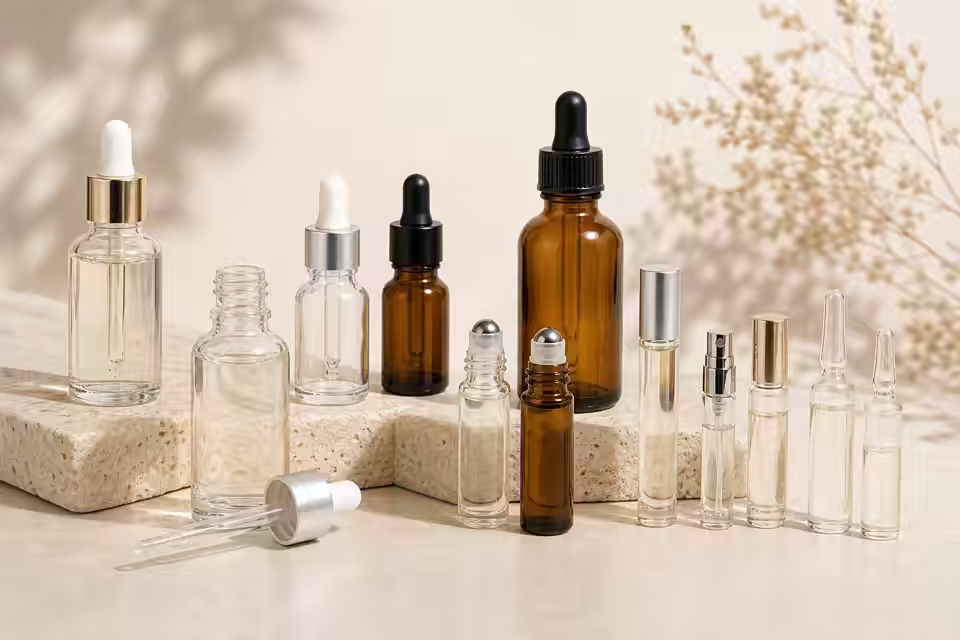
Serum Dropper Bottles Wholesale: Check the Dropper System
For wholesale serum dropper bottles, quote the bottle and dropper assembly together: glass color, neck finish, gasket, bulb, collar, pipette length, target dose, decoration, carton quantity and destination. Approve draw, release, leakage, formula contact and packed shipping with production-intent samples before comparing unit prices.
How should a buyer choose a serum dropper bottle?
Choose a serum dropper bottle as a complete bottle-and-closure system, not by bottle color alone. Define the formula, viscosity, fill volume, target dose, neck finish, gasket, bulb, collar and pipette. Then test production-intent components with the actual formula for draw, dose, drip control, leakage, torque, formula contact, decoration and packed distribution. Treat light-management and child-resistant requirements as evidence-led project specifications.
Match the full dispensing assembly to the project
These routes narrow the sample brief. They do not establish formula compatibility, light protection, regulatory compliance or production performance without evidence for the exact configuration.
| Project requirement | Starting route | System to define | Evidence to review |
|---|---|---|---|
| Serum or facial-oil dispensing | Glass bottle with matched dropper | Formula, fill volume, neck, gasket, bulb, collar, pipette and target dose | Draw and release, dose, drip control, torque, leakage and formula contact |
| Higher viscosity or unusual flow | Review pipette bore, tip and bulb response | Viscosity across intended temperatures, use angle, dose and residual product | Priming, draw, release time, dose repeatability and user handling |
| Light-exposure requirement | Amber, coated or secondary-pack route | Required wavelength range, transmission target, formula and shelf-life protocol | Evidence for the exact production-intent package; color alone is not proof |
| Child-resistant requirement | Exact closure-and-bottle configuration for the destination market | Applicable rule, certification identity, neck, closure, filling and capping process | Current documents for the exact configuration plus usability and production checks |
| Sample, travel or discovery pack | Smaller catalog bottle matched to the same dispensing task | Fill accuracy, label area, closure handling and secondary pack | Leakage, orientation, decoration and packed distribution |
| Pump experience or reduced repeated opening | Compare a separate airless packaging route | Formula, filling, pump engine, dose and evacuation target | Use the airless-versus-dropper guide before sampling |
Catalog Starting Points
Use these model pages to identify a direction, then confirm current specifications and components for the project.
Glass serum dropper reference →Clear glass dropper reference →Boston round dropper reference →Child-resistant reference; verify evidence scope →Build a serum dropper bottle RFQ
Share the formula and production context so the bottle, closure, dispensing and evidence scope can be reviewed together.
Formula-Contact Review
Identify every contact material in the bottle, gasket, bulb and pipette. Review the actual formula using production-intent components and defined storage conditions.
Compatibility GuideDraw & Dose Review
Define the target dose and use pattern, then measure draw, release, drip control and dose repeatability across the intended viscosity and temperature range.
Dropper TroubleshootingSeal & Distribution Review
Evaluate component fit, capping conditions, torque, leakage in relevant orientations, decoration and the complete packed route using agreed criteria.
Sample Approval ChecklistSerum Dropper Bottle FAQ
How should a buyer choose a serum dropper bottle?
Define the formula, viscosity, fill volume, target dose and use pattern before choosing the bottle. Match the neck finish, gasket, bulb, collar and pipette as one system, then test production-intent components with the actual formula for draw, dose, drip control, leakage, torque, formula contact, decoration and packed distribution.
Does amber glass prove light protection for a serum?
No. Amber glass, a coating or an opaque secondary pack may form part of a light-management strategy, but the required wavelength range, transmission target, formula and shelf-life protocol are project-specific. Approve a protection claim only from evidence for the exact production-intent package and formula.
What should be tested in a dropper assembly?
Test the exact bottle, neck, gasket, collar, bulb and pipette with the actual formula and intended fill. Review component fit, torque, sealing, draw and release, dose consistency, dripping, leakage in relevant orientations, formula contact, decoration and the packed distribution route using agreed acceptance criteria.
Continue the serum dispensing cluster
Compare dropper, airless and glass bottle routes by formula, viscosity, dose, closure fit, leakage, light exposure and production-intent testing.