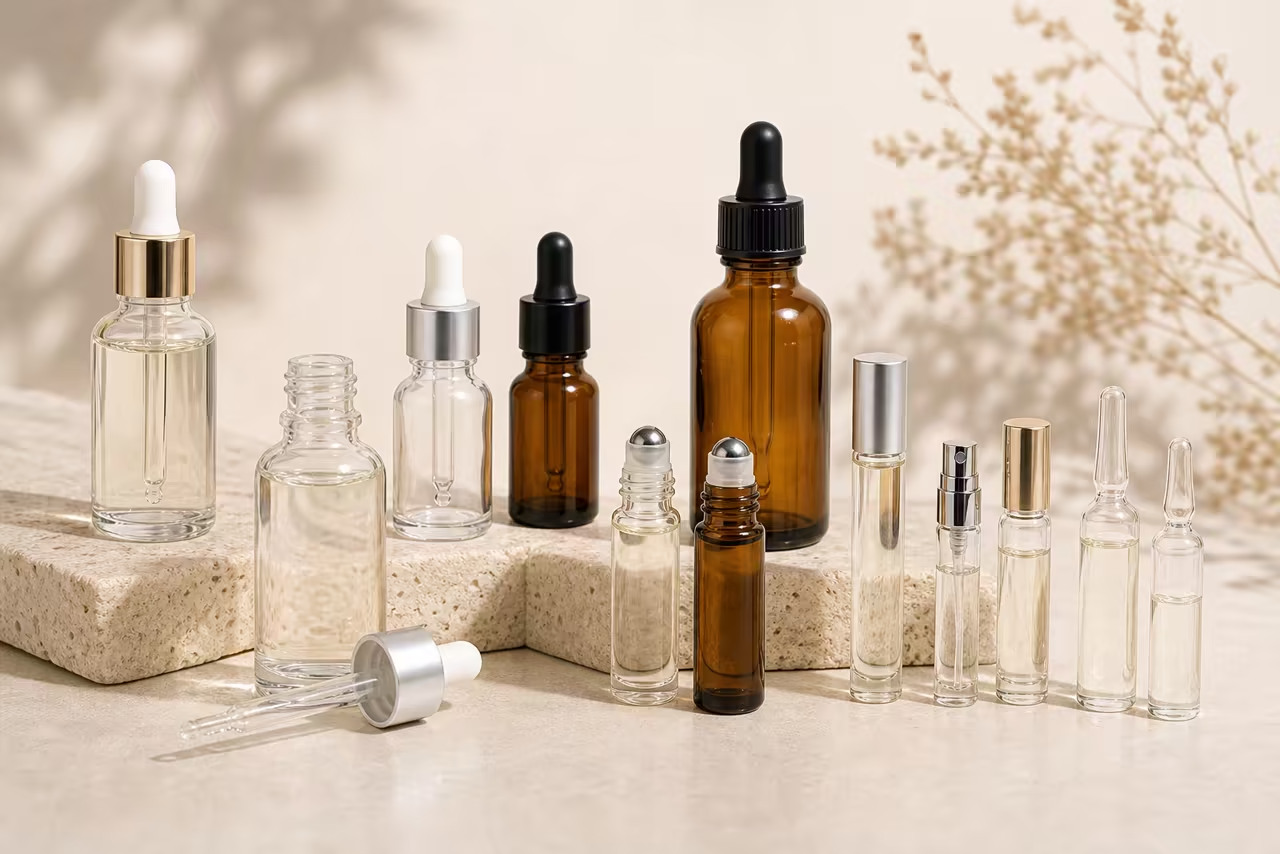
A leaking dropper bottle is not one failure with one universal fix. Product can escape across the bottle sealing surface, through contaminated threads, between the bulb and collar, around a poorly seated pipette, from a damaged bottle or after the dropper assembly loosens in distribution. The same wet collar can therefore point to different causes.
Recent Reddit discussions show the commercial consequences: oil blends that make a bulb sticky, droppers that feel messy during every use, closures that leak in a travel bag and thick serums that will not enter the pipette. Treat those complaints as failure signals, then qualify the exact bottle, dropper, formula, filling process and packed route instead of buying a closure described only as “leakproof.”
Find the first leak path before tightening the cap
Clean the filled pack, assign a sample ID and observe where product first appears. Separate leakage across the bottle land or thread from seepage between the bulb and collar, movement through the pipette connection, damage at the glass heel or sidewall and product deposited outside the seal during filling. Tightening every sample can hide evidence or damage a component.
Record orientation, time, temperature, fill level, formula batch and whether the pack was opened before the symptom appeared. Compare failed packs with unopened filled controls and empty assembled controls. A photograph after each checkpoint is more useful than a final image of a completely wet bottle.
Match the bottle finish and dropper assembly as one system
Nominal neck size does not establish a seal. Review the bottle finish drawing, sealing land, thread profile, neck height and manufacturing tolerances together with the dropper collar, thread, gasket or liner and any tamper component. A similar-looking dropper can engage the thread yet fail to load the intended sealing surface.
Inspect the land for chips, checks, mold seams, contamination and decoration overspray. Confirm collar clearance and whether a metal or plastic shell conceals the functional closure beneath it. Freeze bottle and dropper item codes before testing so an approved result is not later assigned to an unverified substitute.
Qualify the bulb, gasket and liner with the actual formula
Oils, fragrance ingredients, alcohol and other formula components can change elastomers, liners, adhesives or plastics. Possible observations include swelling, softening, hardening, tack, discoloration, loss of recovery and odor transfer. Do not choose a bulb or gasket from a broad material name alone; the grade, formulation, contact time and temperature matter.
Run production-intent compatibility work with the complete dropper assembly. Include realistic storage orientation and check whether product can reach the bulb during shipping or consumer use. If compatibility is uncertain, a separate transit closure and dispensing accessory may be evaluated, but that changes filling, packing and customer instructions and must be treated as a different system.
Set pipette length and geometry for pickup without contact damage
The pipette should reach the intended product zone without bottoming out, loading the bottle base or interfering with closure seating. Record overall assembly length, exposed pipette length, tip shape, bottle internal height and accepted bottom clearance. Bottle and pipette tolerances should be reviewed together.
Test product pickup at full, middle and low fill levels and at intended use angles. A very thick serum may not enter a narrow pipette or may deliver an inconsistent dose even when the bottle does not leak. Enlarging the pipette or changing the bulb can alter dose, drip control and pack proportions, so requalify the complete user action.
Control closure application without inventing one torque value
Too little application can leave insufficient sealing load; too much can deform a liner, strip threads, stress the collar or make the pack difficult to open. ASTM D2063 provides a framework for measuring torque retention on packages with continuous-thread closures, but it does not supply one correct value for every cosmetic dropper.
Develop the application window with the bottle and closure suppliers, filler and responsible technical team. Record equipment, chuck or hand-application method, speed, applied and removal measurements where relevant, elapsed time and sample condition. Recheck after formula exposure and temperature conditioning because the system can relax or change.
Keep formula out of the sealing surfaces during filling
Product on the bottle land or threads can prevent uniform gasket contact and later migrate down the outside. Define fill-nozzle position, anti-drip behavior, bottle handling, target fill and cleanup rules. Inspect the sealing area before closure application rather than wiping every finished bottle and losing the evidence.
Consumer use can also deposit formula on the rim when a loaded pipette touches the bottle opening. Evaluate withdrawal angle, wiper or reducer where used, pipette outside diameter and instructions. A design that depends on perfect user technique is vulnerable even if clean factory samples pass.
Test the filled pack in relevant orientations and temperatures
Start with controlled upright, side and inverted exposure selected for the real route, then inspect at defined checkpoints. Record mass change, visible leakage, closure movement, bulb condition, gasket contact, dose and opening behavior. Use the actual formula or a justified test liquid; water may miss failures created by oils, alcohol, viscosity or surface tension.
Temperature can change formula flow, vapor pressure, component dimensions and elastomer response. The responsible team should select conditions from the intended storage, distribution and use environment. Passing a short room-temperature bench test does not establish shelf-life or parcel-shipping performance.
Protect the pipette and closure during distribution
Evaluate the filled retail pack inside its final shipper. Inserts, cartons and neighboring products must not press the bulb, lever the collar or let glass bottles collide. A tall pipette adds a fragile internal component; impact or excessive bottom contact can create breakage that is invisible until the pack is opened.
Use a route-appropriate packaged-product plan and define failures beyond obvious leakage: collar loosening, pipette fracture, cap scuff, label oil staining, bulb deformation, glass damage and unacceptable dose after shipment. A successful palletized case does not prove an individual ecommerce parcel.
Separate empty-pack screening from filled-pack approval
Empty samples can confirm thread engagement, pipette clearance, appearance and basic assembly. They cannot establish formula compatibility, pressure response, migration, filled weight behavior or repeated dose. Air or vacuum screening can support process control only when the method and defect correlation have been demonstrated for the package.
Approval should use production-intent components, formula, fill, closure application, decoration, label and shipping configuration. Define the sample count, checkpoints and acceptance criteria before testing. AQL-based incoming inspection can help control lots, but it does not replace development and validation of the chosen system.
Turn complaints into a traceable corrective action
For each complaint, record bottle and dropper lots, formula batch, fill date, packing position, shipment route, first-use status and photographs. Retain the failed unit where safe and compare it with unopened samples from the same lots. Look for concentration by component lot, filling line, carton position or storage condition.
Corrective action may involve the finish match, gasket, bulb material, pipette length, application window, fill cleanliness, carton restraint or consumer use design. Change one controlled variable where practical and repeat the relevant tests. Replacing only the visible metal collar rarely addresses a functional seal problem beneath it.
Freeze the bill of materials and retest triggers
The approved record should identify the bottle mold and finish, dropper collar and functional closure, bulb, gasket or liner, pipette material and dimensions, formula, fill, application process, decoration, label, transit pack and test results. Keep signed samples or clear photographs with the specification.
Require review when the bottle supplier or mold, glass finish, collar, thread insert, bulb, gasket, pipette, formula, filling equipment, application settings, decoration or shipping pack changes. That turns “dropper bottle leaking” from a recurring surprise into a controlled packaging requirement that can be quoted, inspected and repeated.
Dropper bottle leak troubleshooting matrix
Trace the first leak path, then qualify the production-intent bottle, dropper, formula, filling process and shipping pack as one controlled system.
| Control area | What to verify | Evidence before approval |
|---|---|---|
| Bottle finish | Bottle item and mold, finish drawing, sealing land, thread, neck height, chips, checks, seams, residue and decoration overspray. | Production-intent bottles inspected against the controlled drawing and accepted defect limits. |
| Collar and functional closure | Collar or shell, thread insert, engagement, gasket loading, tamper component and clearance around the bottle finish. | Exact bottle-and-dropper item codes assembled and evaluated without unapproved substitutions. |
| Bulb, gasket and liner | Material grade, formula contact, swelling, softening, hardening, tack, recovery, odor and temperature exposure. | Filled compatibility observations at defined checkpoints, orientations and relevant conditions. |
| Pipette and dose | Material, exposed length, tip, bottom clearance, bulb recovery, pickup and output across full, middle and low fill. | Dimension record plus representative user trials with the production-intent formula. |
| Filling and application | Target fill, nozzle position, sealing-surface cleanliness, closure equipment, application window and removal behavior. | Recorded line or representative trial settings with clean sealing surfaces and accepted leak results. |
| Formula and environment | Viscosity, oil, fragrance, alcohol, surface tension, storage time, orientation and selected temperature conditions. | Filled-pack results using the actual formula or a justified test liquid with defined acceptance criteria. |
| Distribution pack | Carton or insert restraint, bulb and collar clearance, bottle separation, parcel or pallet route and packed orientation. | Route-appropriate evaluation of the complete filled and packed product, not the bottle alone. |
| Inspection and change control | Failure classes, sample and lot IDs, retained controls, complaint fields, approved bill of materials and retest triggers. | Release and corrective-action records tied to the exact bottle, dropper, formula, process and packout. |
Selection considerations
Find the first leak path before changing or overtightening the assembly. Match the finish and functional closure, qualify the bulb and gasket with the formula, set pipette clearance and dose, control filling and application, then evaluate the filled pack through storage and distribution. Freeze exact component codes and repeat relevant checks when the formula, process, component or packout changes.
Questions to resolve before sampling
- Where does product first appear: at the bottle land or threads, between the bulb and collar, around the pipette connection, or at damaged glass?
- What are the exact bottle finish, functional closure, gasket, bulb and pipette item codes and dimensions?
- Which formula, filling, orientation, temperature, storage and distribution conditions must the complete filled pack pass?
What to send with an inquiry
Share the application or formula, capacity, material preference, closure or dispensing component, decoration, estimated quantity, destination country, target timing and any reference drawings or photos. Final specifications, MOQ, availability and testing requirements are confirmed for the selected configuration.
Buyer questions that shaped this guide
These community discussions are demand signals, not technical or regulatory authorities. The recommendations below are supported separately by the primary references.
- Dropper bottles and essential oils — Users describe bulbs becoming sticky or degraded after contact with oil blends, highlighting the need to qualify the exact elastomer and formula.
- Containers for homemade oil mixes — Discussion compares droppers, pumps and dripper inserts when repeated use becomes messy or difficult to control.
- Droppers, bottles and leakage — A fragrance-making discussion links leakage observations to bottle, closure and liner choices instead of treating every dropper as interchangeable.
- Thick serum and a leaking original pack — A skincare user reports both leakage and poor pickup of a viscous serum, showing that containment and dispensing performance need separate checks.
Primary references and scope
- ASTM D2063 closure torque-retention overview — Describes measurement of torque retention for packages with continuous-thread closures.
- FDA cosmetic GMP guidelines and inspection checklist — Covers control, storage and records for raw and primary packaging materials.
- FDA microbiological safety and cosmetics — Explains contamination risks, including packaging that does not adequately protect a cosmetic product.
- ISTA guidance on testing the complete packaged-product — Clarifies that transport procedures evaluate a specific product-and-package system rather than certifying an individual packaging material.
- ISTA packaged-product test procedures — Explains screening, partial-simulation and general-simulation procedures, including ISTA 3A for parcel-delivery shipments.
- ISO 2859-1:2026 acceptance-sampling overview — Defines AQL-indexed sampling schemes for lot-by-lot inspection by attributes.
These references support closure measurement, packaging controls, cosmetic protection, packaged-product distribution evaluation and lot sampling; they do not approve a specific GloryStarPack dropper or provide one universal torque, compatibility protocol or leak limit. The responsible brand, filler, laboratory and suppliers should define methods and acceptance criteria for the exact formula and configuration.