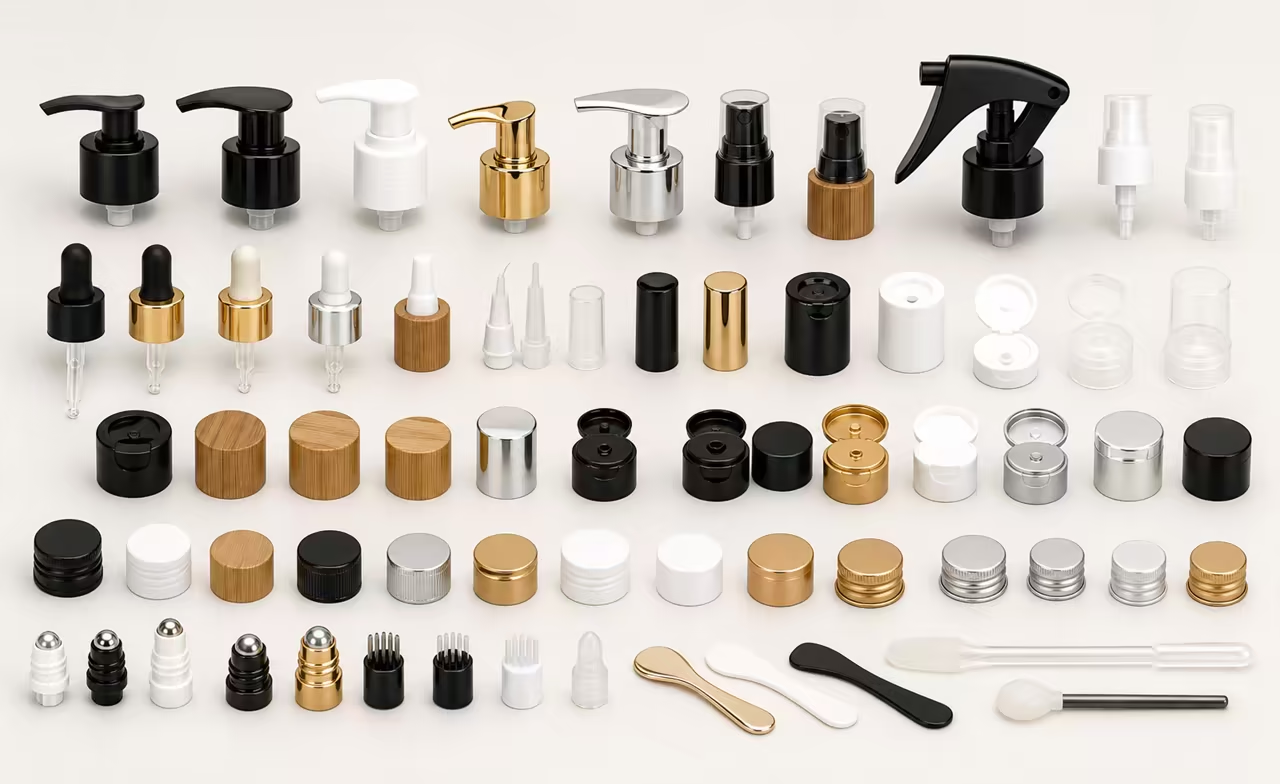
Small components create many of the most expensive packaging problems. Pumps, sprayers, caps, droppers, liners, reducers and rollerballs must be checked against the actual bottle and formula before mass production.
- Confirm neck finish, thread fit, torque and overcap clearance.
- Test leakage after vibration, inversion and temperature changes.
- Check pump output, spray pattern, dip tube length and actuator comfort.
- For droppers and rollerballs, check flow rate, reducer fit and cap sealing.
Keeping these checks visible during sampling helps prevent delays after decoration and filling have already started.
Selection considerations
Create a component approval record that identifies the exact bottle mold, neck finish, liner, dip-tube length and closure version. Similar-looking pumps or caps may not be interchangeable. Repeating the approved configuration on purchase orders helps prevent substitutions that change dispensing or seal performance.
Questions to resolve before sampling
- Is the neck finish, thread, torque, liner or reducer matched to the exact container?
- Has dispensing output, spray pattern, dip-tube length or roller flow been reviewed?
- Which inversion, vibration, temperature and formula-compatibility checks apply?
What to send with an inquiry
Share the application or formula, capacity, material preference, closure or dispensing component, decoration, estimated quantity, destination country, target timing and any reference drawings or photos. Final specifications, MOQ, availability and testing requirements are confirmed for the selected configuration.
Primary references and scope
- ASTM D2063 closure torque-retention overview — Describes measurement of torque retention for packages with continuous-thread closures.
- ASTM packaging standards index — Identifies current packaging methods for closures, shipping units, conditioning and package evaluation.
- ISO 2859-1:2026 acceptance-sampling overview — Defines AQL-indexed sampling schemes for lot-by-lot inspection by attributes.
Select test methods, sampling plans, conditioning and acceptance limits for the exact package and intended use. A standard title or nominal neck designation does not prove that a container and closure are interchangeable or approved.