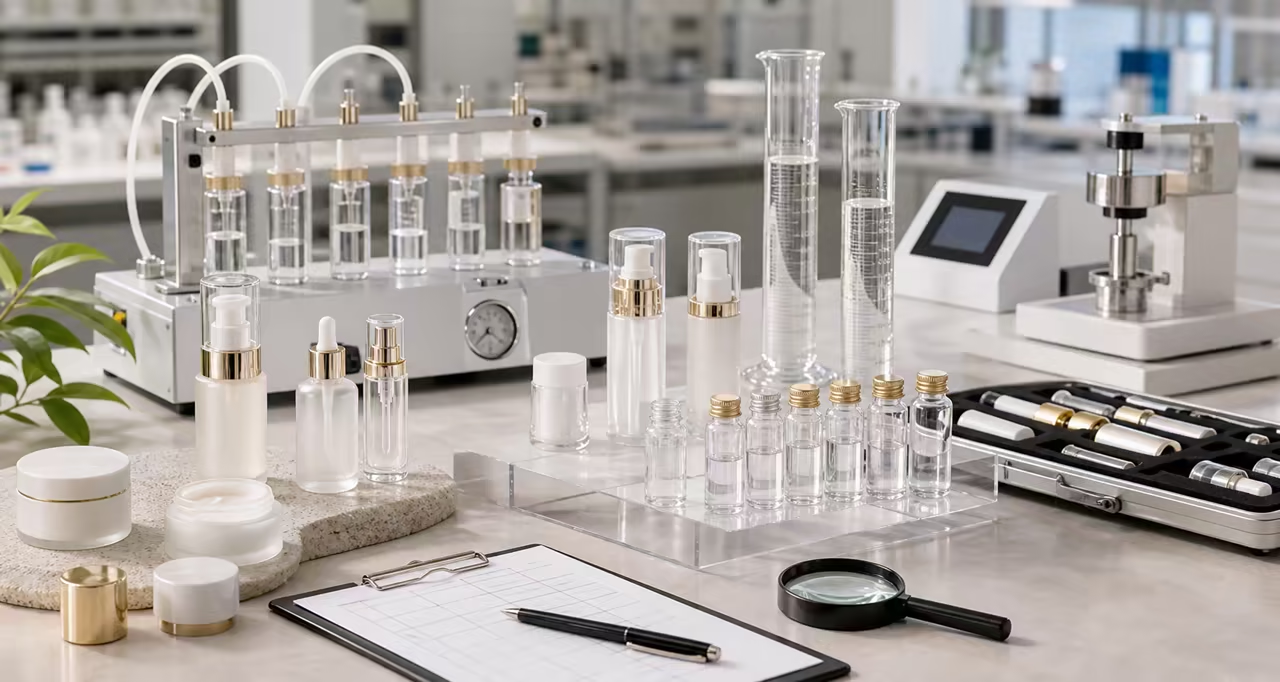
A glass bottle lot should not be accepted or rejected from a list of defect names copied from another project. A small visual variation, a sharp edge, a damaged sealing surface and an unstable base do not carry the same risk. The useful approach is to connect each observation to containment, filling-line handling, closure performance, decoration, consumer safety and the agreed appearance standard.
This guide helps packaging buyers turn terms such as checks, stones, blisters, seeds, seams, scuffs and dimensional variation into an inspection plan. It does not prescribe universal tolerances. The bottle drawing, approved samples, product use, filling process, destination requirements and written purchase specification determine what must be measured and what constitutes a defect.
Start with the bottle specification and intended use
Identify the bottle item or mold, nominal and brimful capacity where relevant, target weight, principal dimensions, glass color, neck finish, closure, decoration, fill product, filling process and packed route. A bottle for still cosmetics, a carbonated beverage, a hot-fill food and a premium spirit may require different performance evidence even when their shapes look similar.
Separate requirements that protect function from appearance preferences. A sealing-land chip can affect closure performance; an out-of-flat base can affect conveyor stability; a surface mark may be primarily cosmetic. The project team should define the consequence and acceptance route before inspectors begin sorting production.
Classify defects by consequence, not only by name
Many quality systems use critical, major and minor classes, but those labels only work when the project defines them. A critical condition may create a safety or severe functional risk. A major condition may prevent normal filling, sealing, labeling, packing or use. A minor condition may depart from the approved appearance without materially impairing function. The same observation can change class when bottle use changes.
Write defect descriptions with location, size or measurable condition where practical, and include photographs of accepted and rejected boundaries. Avoid vague instructions such as “no bubbles” or “perfect glass.” Small enclosed seeds, open blisters, stones with surrounding stress and inclusions near a high-load area need different assessment rather than one generic bubble rule.
Inspect the finish and sealing area first
The neck finish controls the interface with a screw cap, cork, pump, sprayer, crown, ROPP closure or fragrance crimp component. Review the sealing land, thread or bead geometry, finish height, bore, ovality, mold seam, chips, checks and contamination. Use the controlled drawing and the exact production closure rather than judging fit from nominal diameter alone.
Decoration overspray, glass debris or handling damage near the finish can change sealing and application behavior. Where the project uses a liner, gasket, plug seal or crimped pump, inspect the surfaces that carry the sealing load and record the assembly version. A closure that hides the finish visually does not remove the need to inspect it.
Check body, heel and base for handling risk
Inspect sidewalls for checks, cracks, stones, open blisters, sharp seams, thin-looking areas, contact scuffs and concentrated impact damage. At the heel and base, look for instability, rocking, sharp edges, heavy seams, damage and conditions that could interfere with conveyors, dividers or stable display. Visual inspection should use controlled lighting, viewing distance and bottle rotation so results are repeatable.
Appearance alone cannot establish wall thickness, residual stress, impact resistance, internal-pressure capacity or thermal-shock performance. Select measurement or test methods appropriate to the application and current specification. Destructive test results apply to the sampled units and defined lot; they do not turn an unrelated bottle shape into an approved equivalent.
Measure capacity, dimensions and weight with a defined method
State whether capacity means nominal fill, fill-point capacity or brimful capacity, and define the conditioning, liquid, temperature and reading method. Record bottle height, body width or diameter, label panel, finish dimensions, base clearance and other features that affect filling, closing, coding, labeling, inserts and case packing.
Weight can help monitor process consistency but is not a substitute for wall-distribution or performance evaluation. A bottle within total-weight limits can still place glass unevenly. Use calibrated equipment, a written sampling frequency and traceable sample IDs, then compare results with the controlled drawing and approved production range.
Evaluate annealing and application-specific performance
Residual stress from forming and annealing can affect glass-container performance. Polariscopic examination, internal-pressure, thermal-shock or other glass-container methods may be relevant depending on the bottle and use. The responsible technical team should select current methods, sample quantities, conditioning and limits instead of treating every glass package as if it carries the same loads.
Pressure, carbonation, hot filling, pasteurization, retort, freezing, caustic washing or repeated reuse introduce requirements beyond a general cosmetic appearance check. Obtain the application-specific bottle specification and testing plan before purchase. Do not infer suitability from glass thickness, bottle weight or a supplier’s broad “food grade” description.
Inspect decoration on the actual production glass
Coating, frosting, screen printing, decals, hot stamping, labels and metallized components create their own defect opportunities. Review artwork position, color range, opacity, registration, pinholes, runs, scratches, contamination, edge quality and legibility against signed standards. Inspect both the decorated surface and any functional area that decoration must not enter.
Use production-intent glass because mold seams, surface treatment and bottle variation affect decoration. Include formula or alcohol contact, abrasion, filling-line guides, carton dividers and normal handling where relevant. A visually approved display sample may still fail after filling or transport if the finish system was never exposed to the actual route.
Build a lot sampling plan before goods arrive
ISO 2859-1 provides AQL-indexed sampling schemes for inspection by attributes, but an AQL is not permission to manufacture defects and does not define which observations are critical, major or minor. The purchase specification should state lot identity, inspection level or plan, defect classifications, acceptance criteria, switching rules where used and the action for nonconforming lots.
Choose inspection points that preserve evidence: before decoration, after decoration, after closure assembly and before shipment as the project requires. Keep retained samples and link reports to production date, line, mold or cavity information where available, decoration batch and carton position. If a lot fails, define containment, sorting, reinspection, concession or rejection authority in writing.
Test closure, filling line and final pack as separate evidence
Incoming bottle inspection cannot prove that the final package will seal, dispense, run on the line or survive distribution. Use production-intent bottles for conveyor stability, nozzle clearance, fill accuracy, closure application, torque or crimp review, label placement and coding. Evaluate the exact formula and component system when compatibility or leakage can change after exposure.
Then inspect the complete retail and shipping configuration. Dividers should prevent bottle-to-bottle contact, restrain movement and protect decoration. A palletized shipper and an ecommerce parcel face different hazards. Use a route-appropriate packaged-product plan and record breakage, abrasion, closure movement, leakage and carton failure separately from empty-bottle defects.
Freeze approved limits and change-control triggers
The final quality file should include the bottle drawing, mold or item code, approved samples, visual boundary standards, closure and decoration versions, measurement methods, sampling plan, test reports, packing specification and release authority. Suppliers and buyers should use the same revision so an old photograph or quotation does not override the current specification.
Require review when the mold, glass composition or color route, finish, bottle weight, supplier, decoration, closure, filling process, secondary pack or distribution route changes. A disciplined inspection system does not promise defect-free glass; it makes risk, evidence, decisions and corrective action traceable from the RFQ through repeat orders.
Glass bottle inspection control matrix
Define each observation by location, consequence and written acceptance criteria. A defect name alone does not establish whether a bottle is safe, functional or acceptable for a specific project.
| Control area | What to inspect | Evidence before lot release |
|---|---|---|
| Identity and specification | Bottle item or mold, drawing revision, intended use, capacity, weight, glass color, finish and production lot. | Traceable lot record matched to the current purchase specification and approved samples. |
| Neck finish and sealing area | Land, bore, thread or bead, finish height, ovality, seams, chips, checks, contamination and decoration exclusion. | Measured drawing checks plus assembly with the exact production closure, liner, gasket or pump. |
| Body, heel and base | Cracks, checks, stones, open blisters, sharp seams, scuffs, impact damage, base stability and handling surfaces. | Controlled visual boundary samples and application-specific measurement or performance results. |
| Capacity and dimensions | Defined capacity method, height, width or diameter, label panel, base clearance and line-critical dimensions. | Calibrated measurements at the documented sampling frequency with sample and lot IDs. |
| Decoration and legibility | Position, color, opacity, registration, pinholes, scratches, rub, formula exposure and required information. | Signed decorated standard plus production-intent exposure, handling and distribution observations. |
| Lot sampling and disposition | Defect classes, sampling plan, acceptance criteria, inspection stage, retained samples and failure action. | Completed report showing acceptance, containment, sorting, concession or rejection authority. |
| Filling and closure system | Conveyor stability, nozzle and coding clearance, closure application, seal, leakage and line handling. | Production-intent line trial using the approved bottle and component configuration. |
| Final packed product | Bottle separation, restraint, abrasion, breakage, closure movement, leakage and carton performance. | Route-appropriate evaluation of the complete filled or defined empty packaged-product system. |
Selection considerations
Define glass bottle defects by their consequence for safety, sealing, filling, decoration, handling and appearance. Control the drawing, approved boundary samples, lot sampling plan and measurement methods together, then keep bottle inspection separate from closure, line and final packaged-product evidence.
Questions to resolve before sampling
- Which observations are critical, major or minor for the bottle’s actual fill, closure, line and consumer use?
- What drawing, approved boundary samples, measurement methods and lot sampling plan control acceptance?
- Which application-specific glass, closure, filling-line and distribution tests are required beyond visual inspection?
What to send with an inquiry
Share the application or formula, capacity, material preference, closure or dispensing component, decoration, estimated quantity, destination country, target timing and any reference drawings or photos. Final specifications, MOQ, availability and testing requirements are confirmed for the selected configuration.
Primary references and scope
- ASTM glass-container standards index — Lists active methods covering glass-container sampling, internal pressure, thermal shock and polariscopic examination.
- ISO 2859-1:2026 acceptance-sampling overview — Defines AQL-indexed sampling schemes for lot-by-lot inspection by attributes.
- ASTM D4169 distribution testing overview — Provides a framework for evaluating shipping units against distribution hazards.
- ISTA guidance on testing the complete packaged-product — Clarifies that transport procedures evaluate a specific product-and-package system rather than certifying an individual packaging material.
- ISTA packaged-product retesting guidance — Identifies product, package, process and distribution changes that may require performance retesting.
These references identify glass-container methods, lot sampling and packaged-product evaluation frameworks. They do not supply universal defect limits or certify any GloryStarPack bottle. The buyer, supplier, filler and responsible technical team should define current methods and acceptance criteria for the exact bottle, product, process and route.