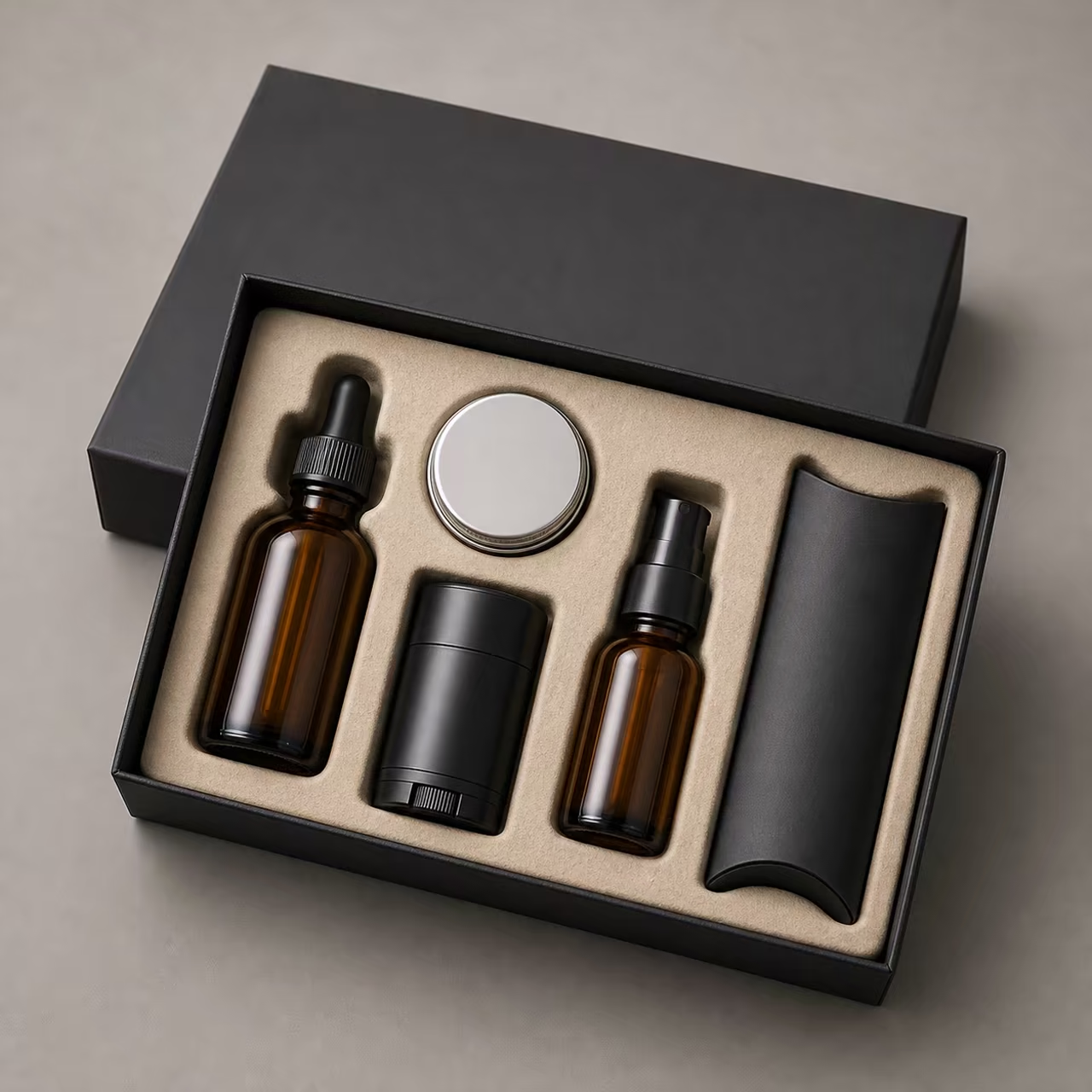
To identify a glass bottle neck finish, start with the bottle maker’s item code and current finish drawing. Match the closure to the thread or bead profile, sealing land and tolerances shown there, then review the exact bottle, closure and liner or gasket under the intended filling and capping conditions. A nominal diameter or photo alone does not prove fit; similar-looking bottles can have different profiles or tolerances.
Common bottle and closure routes
- Bar-top or cork finishes: common for spirits and selected wines. Review shank diameter, insertion depth, top material, extraction force and the bottle’s internal sealing surface.
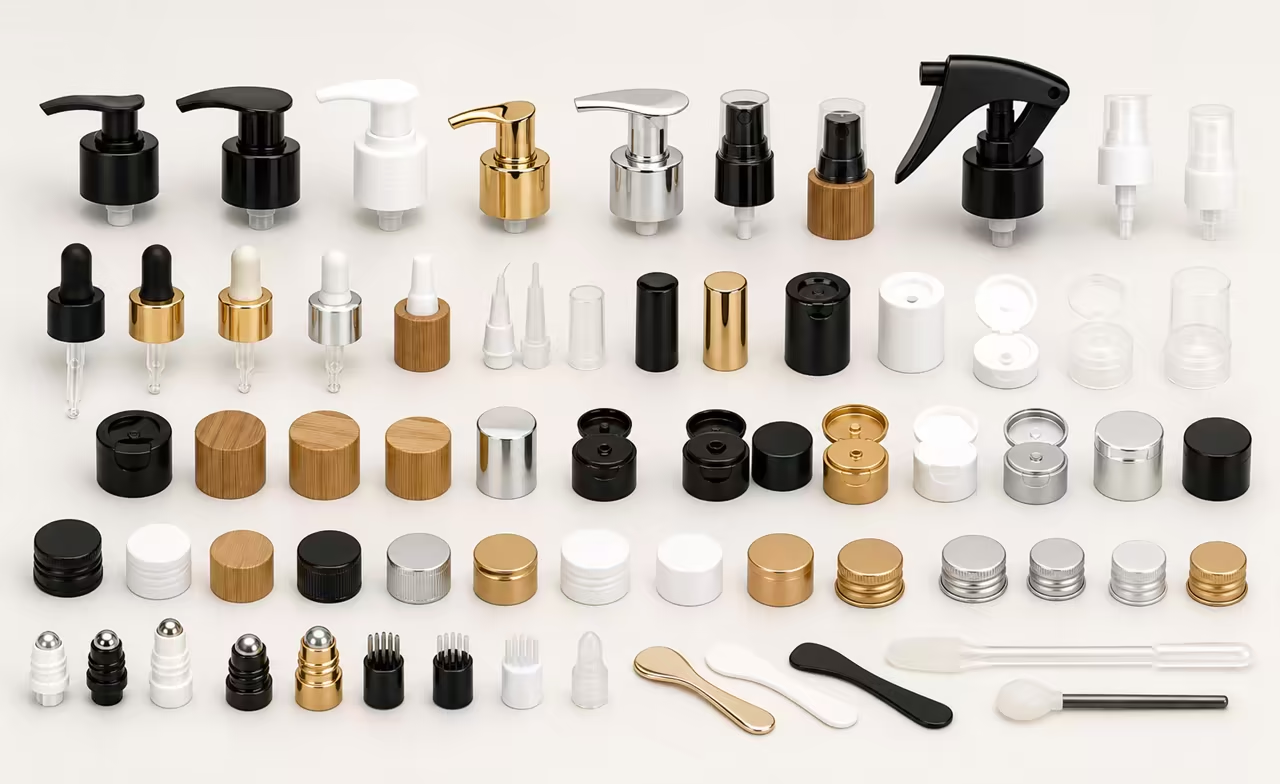
- Continuous-thread screw finishes: used across beverages, food, cosmetics and personal care. Confirm thread designation, cap dimensions, liner or plug seal, application torque and tamper-evident requirements.
- ROPP finishes: paired with roll-on pilfer-proof aluminum closures for selected wine, spirits and beverage formats. The exact finish and capping equipment must be reviewed together.
- Crown finishes: common for beer and some carbonated drinks. Bottle specification, crown type, carbonation, filling temperature and any thermal process require project-specific validation.
- Swing-top systems: combine a compatible bottle finish with stopper, gasket and wire-bail components. Check gasket contact, closure force and repeated-use expectations.
- Crimp and pump finishes: common for fragrance bottles. Match the glass neck with the pump, gasket, collar, dip tube and crimping setup.
Fit checks before decoration
Approve the closure on the undecorated production-intent bottle first. Check seating, torque or insertion, liner contact, leakage, opening force, overcap clearance and the way the component runs on filling or capping equipment. Decoration near the neck can change clearances, so coated or metallized components need a final fit review as well.
Record the approved combination
The approval sheet should identify the exact bottle mold or item code, finish drawing, closure version, liner or gasket, dip-tube length where applicable and sample date. That record is more reliable than a photo or generic description when the project is reordered.
Selection considerations
Ask for the bottle finish drawing and the closure specification in the same technical review. Nominal diameter is only one dimension; threads, beads, sealing surfaces, liner contact and application equipment determine whether the system can be approved.
Questions to resolve before sampling
- What finish drawing or bottle item code identifies the exact neck geometry?
- Which closure, liner, gasket, pump or dip-tube version will be used in production?
- What filling, capping, pressure, thermal-process or opening-force checks apply to the product?
What to send with an inquiry
Share the application or formula, capacity, material preference, closure or dispensing component, decoration, estimated quantity, destination country, target timing and any reference drawings or photos. Final specifications, MOQ, availability and testing requirements are confirmed for the selected configuration.
Primary references and scope
- ASTM D2063 closure torque-retention overview — Describes measurement of torque retention for packages with continuous-thread closures.
- ASTM packaging standards index — Identifies current packaging methods for closures, shipping units, conditioning and package evaluation.
- ASTM glass-container standards index — Lists active methods covering glass-container sampling, internal pressure, thermal shock and polariscopic examination.
These references identify possible packaging and glass-container methods, not a universal neck-finish compatibility table. Use current drawings and test the exact bottle, closure, liner, process and packed product.