Short answer: Good cosmetic sample packaging gives the customer enough product for a defined trial, protects the formula, stays identifiable after opening and can be filled, labeled, assembled and shipped consistently. Choose the sachet, mini vial, tube, jar, dropper, pump or spray from the product action and number of intended uses—not from appearance alone.
A discovery kit should help a customer understand the products, not create a drawer of anonymous sachets and half-used minis. Beauty-box and fragrance discussions repeatedly distinguish memorable, well-curated sets from sample clutter that is hard to identify, dispense or finish. Packaging has to support the trial sequence, protect each formula and make the next purchase clear.
For sourcing, treat the kit as one product system. Mini vials, sachets, jars, tubes, labels, applicators, inserts, cards, retail boxes and export packing can each have different minimum quantities and lead times. A complete bill of materials reveals the real cost and assembly work before artwork begins.
Define what the sample must prove
Choose a clear objective: fragrance discovery, shade matching, regimen trial, subscription-box value, ecommerce sampling or professional demonstration. The objective determines how many products belong in the set, the order of use and the amount needed for a useful judgment.
A sample that supports one application has different requirements from a multi-day skincare trial or several fragrance wear tests. Define the target number of uses from the formula dose and intended experience, then confirm fill accuracy and usable evacuation. Avoid oversized sample components that appear generous while delivering too little product for the stated trial.
Match cosmetic sample packaging to each formula
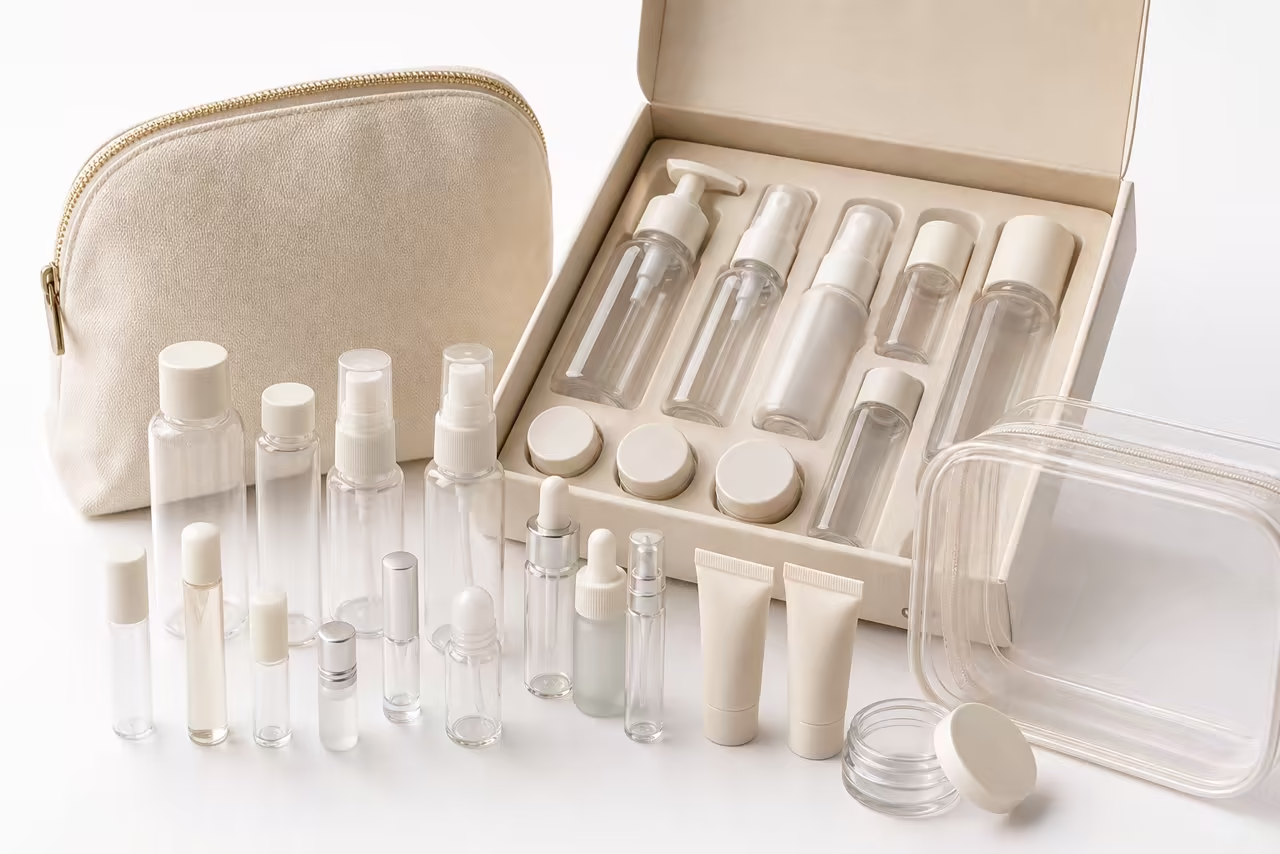
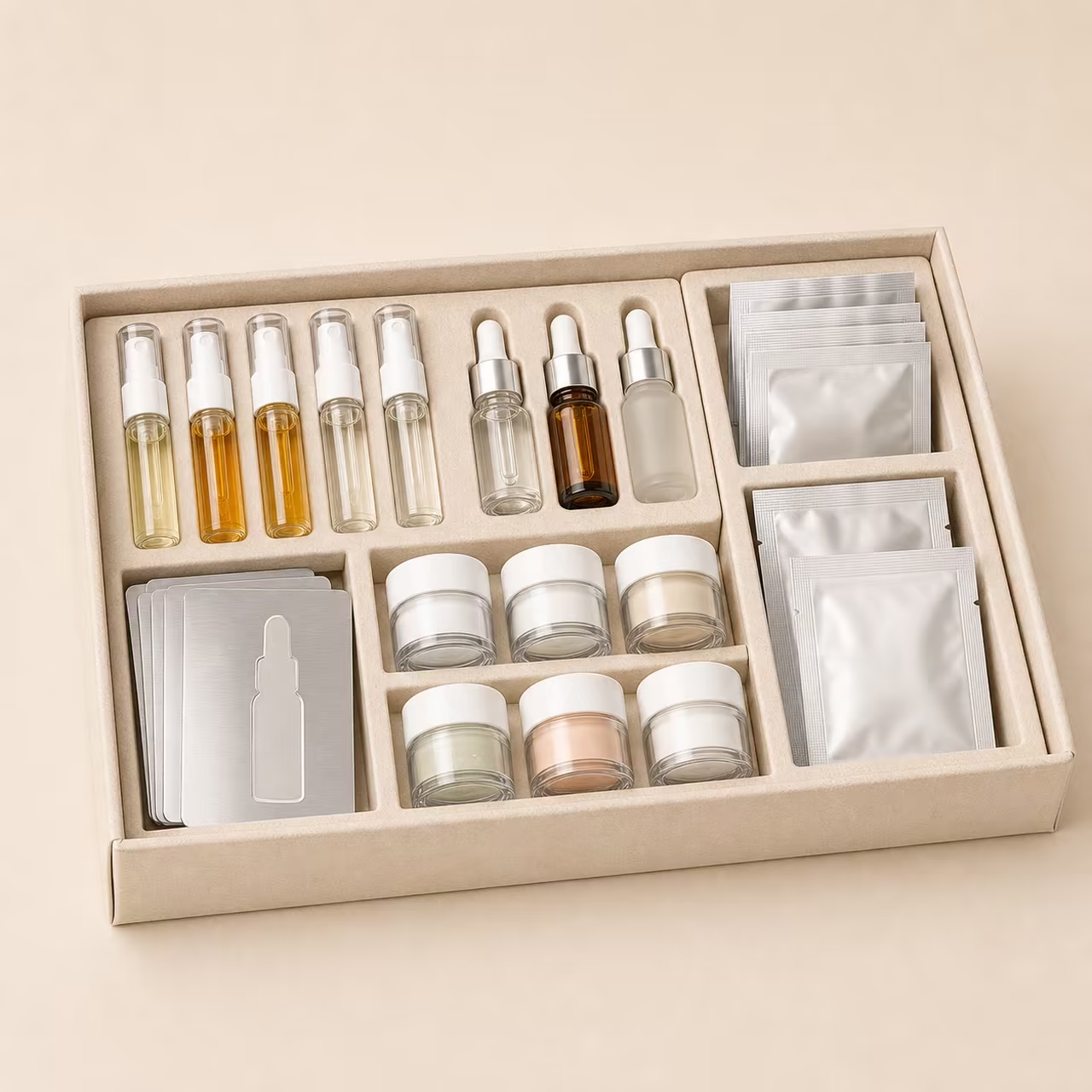
Cosmetic sample packaging can include sachets, mini tubes, jars, droppers, pumps, roll-ons, spray vials and sticks. A sachet can provide a controlled single use but may be messy to reopen or store. A jar gives direct access to a thick cream but changes the handling and preservation assumptions. Mini pumps and sprayers improve the use action only when the formula, engine and fill process are qualified at that scale.
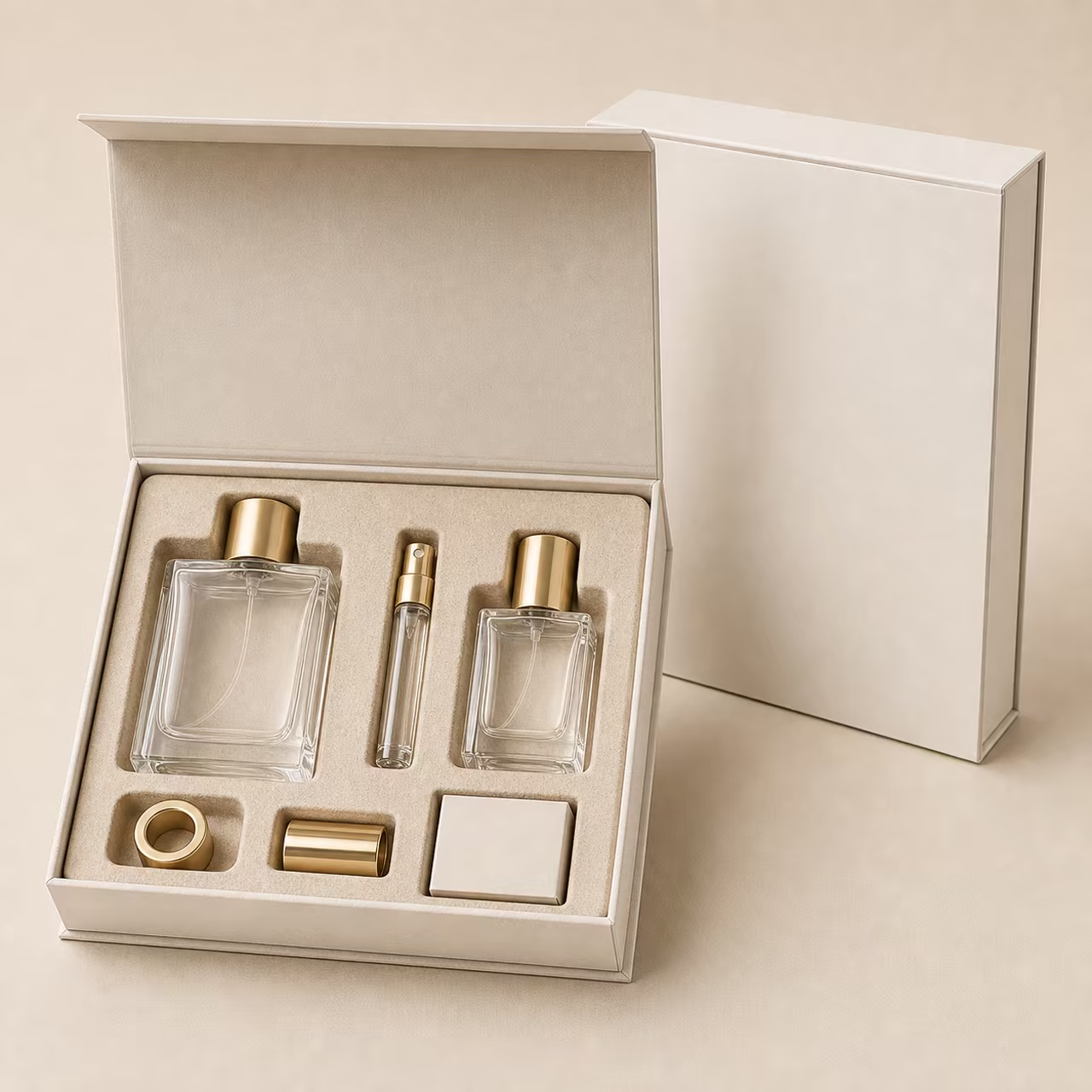
Fragrance discovery sets need atomizer or vial selection, closure retention, label area and filled-product transport review. Alcohol-based finished fragrances may have transport requirements that differ from empty components. Makeup samples may need a hygienic applicator, wiper, shade identification and enough product to evaluate color or wear without implying that one applicator suits every user.
Compare useful trial quantity with nominal capacity
Start with the normal product dose and the number of applications or wear tests the sample must support. Then account for headspace, formula left in the package, pump or dropper pickup, sachet residue and the minimum fill the chosen process can hold consistently. The nominal container capacity is not the same as usable product delivered to the customer.
Test the filled sample in the position and sequence in which it will be used. A small pump may need product for priming before it delivers the stated trial, while a wide mini jar can expose more formula each time it is opened. Record fill targets and usable-evacuation acceptance criteria before artwork states a size or number of uses.
Design a useful and legible trial journey
Arrange products in the order the customer should use them. Keep names, shades, numbers and directions visible after the components are removed from the insert. If the primary pack cannot carry all required information legibly, plan the card, outer carton, leaflet or other destination-appropriate route with the responsible regulatory team.
Do not rely on tiny color differences alone. Customers should be able to return each component to the correct position and connect it to a full-size product. QR codes can add instructions or commerce links, but essential identification and required labeling should not disappear when a phone or network is unavailable.
Choose an insert that protects and presents
Model the tray or insert around the production-intent decorated components, not nominal catalog dimensions. Check finger access, removal force, vial orientation, cap clearance and whether labels remain readable. Paperboard or molded pulp can support a fiber-based direction; foam, thermoformed trays or elastic structures may solve different protection and presentation needs.
An insert that grips too tightly can pull off a cap or damage a label. One that is too loose can allow glass vials and metal components to collide. Evaluate the complete retail pack inside its ecommerce or export carton, because the premium display insert may not provide enough distribution restraint by itself.
Plan MOQ, filling and assembly as one system
Do not use the primary vial or sachet minimum as the MOQ for the complete kit. The bottle, closure, label, printed card, insert and carton may use different production routes, setup quantities and pack counts. Ask the supplier to separate stock components, decorated parts, printed packaging and final assembly so the binding quantity and leftover-component risk are visible.
List who supplies, fills, labels and assembles every component. Confirm filling equipment, minimum fill, headspace, sealing method, coding, cleaning controls and the sequence for placing parts into the kit. Small containers can magnify fill variation and alignment problems that are less visible on a full-size pack.
Create inspection points for component identity, fill, seal, leakage, spray or dose, label orientation, shade order, insert retention, carton closure and count. Use production-intent samples for approval, then keep a signed reference and packing diagram. A kit with ten components creates more opportunities for a single missing or incorrect item.
Resolve labeling at the kit level
FDA guidance for U.S. cosmetics includes specific provisions for small packages and off-package ingredient labeling under defined conditions. Other destinations have their own rules. The responsible business must decide what appears on the primary sample, display card, outer box, leaflet or digital channel and whether a product is a cosmetic, drug, fragrance or another regulated category.
“Not for sale,” “sample” or a small capacity does not automatically remove labeling, safety or traceability responsibilities. Make room for product identity, shade or variant, lot or coding needs, directions, warnings and responsible-party information required for the actual program.
Connect sampling to the next purchase
Curate the set so the customer can remember what they tried and act on the result. A printed sequence, evaluation card, clearly named slots or full-size reference can improve recall. If a voucher or code is included, confirm validity, regions and which products can be purchased when the set reaches the customer.
Measure more than unit cost. Track completion, favorite products, full-size conversion, complaints about leakage or dispensing and unused samples. The next version might need fewer better-matched products, a longer trial amount or a simpler insert. The strongest discovery kit earns its packaging by helping customers make a confident choice.
Cosmetic sample format selection matrix
Match each sample to the number of uses and product action the trial must support. A miniature package should not be selected from visual scale alone.
| Sample format | Useful trial direction | Approval focus |
|---|---|---|
| Sachet | Single application of a cream, gel, shampoo or mask with compact distribution. | Formula-contact structure, fill and seal, tear behavior, clean dispensing and labeling route. |
| Mini tube | Several controlled uses of a flowable cream, cleanser, conditioner or SPF formula. | Layer and shoulder compatibility, cap, crimp, squeeze force, dose, decoration and evacuation. |
| Mini jar | Direct access to a thick cream, balm, mask or color product. | Formula exposure, opening and closing, applicator, seal, residual access and label space. |
| Pump or dropper mini | Measured skincare trial when the engine and product path work at low fill volume. | Priming, dose, pickup, leakage, formula protection and sufficient product for the intended uses. |
| Fragrance vial or spray | Multiple wear tests with a clearly identified scent. | Closure or sprayer, fill, label, leakage, insert retention and filled-product transport classification. |
| Multi-product kit | A sequenced regimen, shade story or curated fragrance exploration. | Bill of materials, order of use, component count, insert, required information, assembly and full-size link. |
Selection considerations
Start with the customer decision and number of useful trials, then select the sachet, vial, jar, tube or pump that can deliver that experience. Treat every primary pack, label, applicator, insert, card and carton as one bill of materials, and keep assembly and full-size conversion as visible design requirements.
Questions to resolve before sampling
- What decision should the sample help the customer make, and how many useful applications or wear tests are needed?
- Which formula-specific mini format, label route and applicator can support that trial without becoming sample clutter?
- Who fills, labels, assembles and inspects every component, insert and outer pack in the final kit?
What to send with an inquiry
Share the formula or product type, intended trial uses, fill quantity, preferred sachet, vial, tube, jar, pump or spray format, number of variants, labels, insert and carton needs, assembly plan, order quantity, destination and launch timing. Final component availability, MOQ, filling, testing and packing requirements are confirmed for the complete sample kit.
Primary references and scope
- FDA summary of cosmetics labeling requirements — Summarizes U.S. labeling responsibilities and adulteration or misbranding considerations.
- FDA cosmetic GMP guidelines and inspection checklist — Covers control, storage and records for raw and primary packaging materials.
- FDA microbiological safety and cosmetics — Explains contamination risks, including packaging that does not adequately protect a cosmetic product.
- ASTM D4169 distribution testing overview — Provides a framework for evaluating shipping units against distribution hazards.
- U.S. PHMSA interpretation on perfumery products — Explains that transport classification depends on the product function and whether a finished cosmetic contains a regulated flammable liquid.
These sources frame small-format labeling, quality, contamination and distribution considerations; they do not define a universal discovery-kit specification or transport classification. The responsible project parties must resolve formula safety, labeling, assembly, filled-product transport and destination requirements.