Travel beauty discussions are full of containers that leaked into a toiletry bag, pumps that fired under pressure and miniature jars that were hard to refill or clean. Small capacity does not make a package travel-ready. The bottle, closure, formula, fill level, temperature, orientation and the way the kit is packed all influence performance.
A useful sourcing brief starts with the trip and product, not a generic “TSA size” request. Passenger baggage limits and carrier rules vary by authority, country and route, so the responsible traveler or seller should confirm current requirements. Packaging selection still needs its own leakage, compatibility, hygiene and labeling review.
Match the travel format to the formula
List each formula, target amount, number of uses and expected conditions. Low-viscosity toners and oils can migrate through small gaps that a cream may not reach. Thick conditioners and sunscreens may be difficult to dispense through a narrow opening when cold. Particle-containing products, alcohol-based sprays and powders each need a suitable product path and material review.
Choose the smallest practical format only after allowing for fill accuracy, headspace, pump displacement and usable evacuation. Overfilling can load the closure or reduce the headspace needed by the validated filling process. A container that is too large can increase movement, trapped air and unnecessary kit volume.
Select a closure for movement and pressure
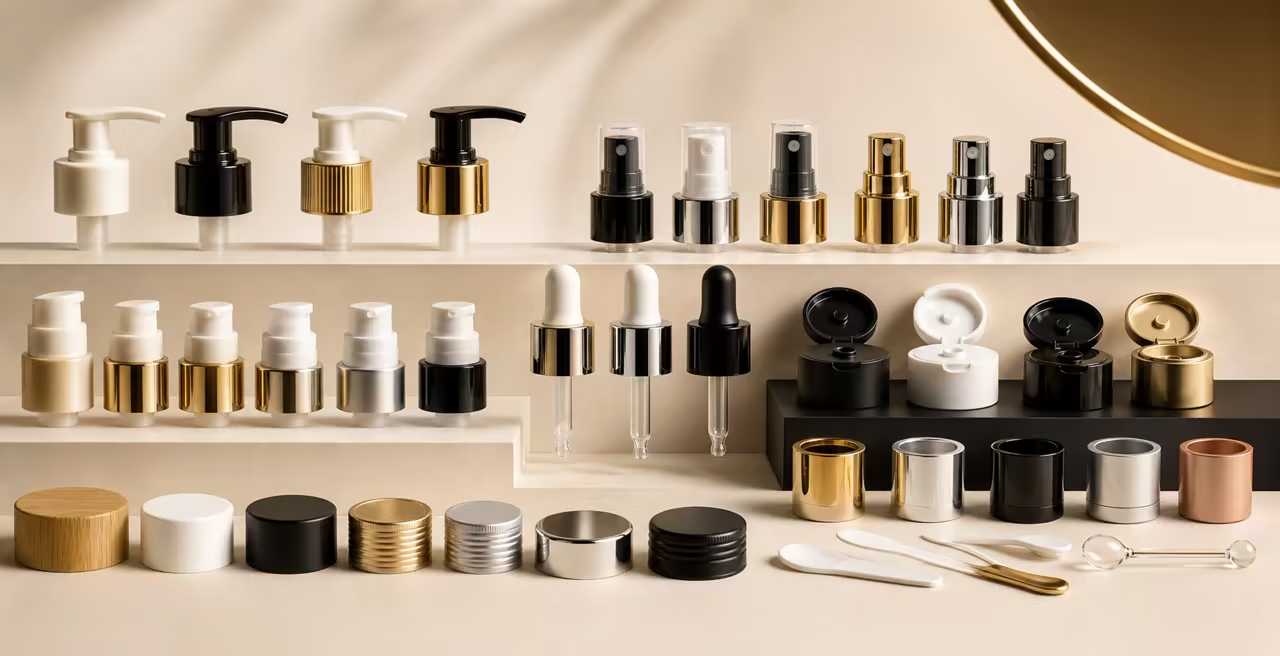
For screw caps, review the finish match, sealing surface, liner or gasket, thread engagement and opening force. Flip-tops need hinge and latch retention; pumps and sprayers may need a lock, clip or protective overcap that cannot be accidentally loaded by the surrounding kit. Roll-ons and droppers add applicators, wipers or bulb components that must stay seated.
Do not rely on a visual fit or a marketplace claim of “leakproof.” Approve the exact container and closure item codes with the intended formula. Record application settings where relevant and repeat the check after decoration, because a coating, label or sleeve can change closure clearance and how the pack sits in an insert.
Test the filled pack in realistic orientations
Use upright, side and inverted orientations only as part of a documented plan. Record fill weight, headspace, duration, temperature and first visible leak location. Temperature cycling can expose expansion, formula flow or seal behavior that a short room-temperature check misses. Preserve controls so a failure can be compared with the approved configuration.
Then evaluate the full packed system using a distribution approach appropriate to the final route. A pump may remain sealed on a bench but discharge when pressed by another bottle. A glass jar may not leak yet still chip when loose items collide. The pouch, insert, elastic restraint or divider should prevent component contact without placing continuous load on actuators or caps.
Plan refilling, cleaning and identification
Reusable travel packs need openings large enough for the intended transfer without making the closure harder to seal. Review whether the formula can be poured, pumped, pipetted or scooped into the container cleanly. The cleaning and drying instruction must be compatible with the validated material and product-use plan; adding water or household residue can create a different hygiene risk.
Small packs are easy to confuse. Provide durable identification for the formula and essential use information rather than relying on cap color alone. If the travel container is sold prefilled, the responsible business must meet applicable cosmetic labeling requirements for the destination. If it is an empty accessory, avoid implying that one container is suitable for every formula.
Build kits around separation and access
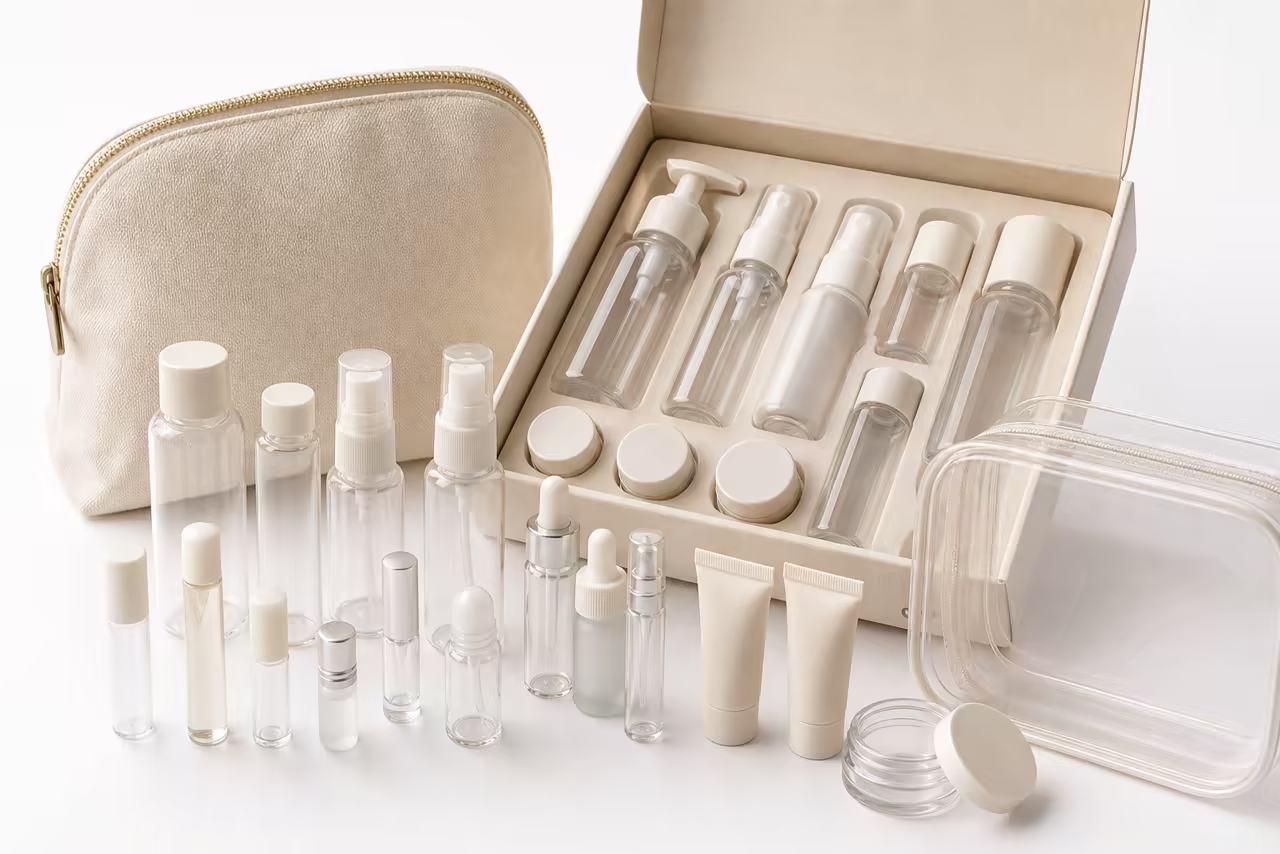
A travel or sample packaging kit can mix bottles, tubes, jars, atomizers and solid formats. Place higher-risk liquids where a closure cannot be pressed or unscrewed by neighboring parts. Separate glass from hard metal components, keep labels visible and make the most-used items accessible without unpacking the entire bag.
Secondary containment can limit the consequence of a leak but should not replace a functional primary pack. Test how a pouch zipper, heat seal or absorbent layer behaves with the intended formula. The outer kit also needs room for real filled dimensions rather than nominal catalog sizes.
Approve a repeatable travel configuration
The final record should identify container, closure, liner or gasket, pump or orifice, capacity, fill, formula, label, orientation plan, test conditions and kit position. Include opening, closing and dispensing trials after distribution exposure. This separates a one-off sample that survived a trip from a configuration the supplier and brand can reproduce.
For hospitality or prefilled minis, also confirm lot coding, filling-line handling, case packing and destination requirements. For consumer-refillable sets, make the compatible product types and limitations clear. The goal is not an absolute guarantee under every journey; it is evidence that the complete pack is fit for the use and route the brand actually promises.
Travel packaging format and test matrix
Map each formula to its dispensing and containment risks, then test the complete packed kit. Small size alone does not establish compatibility or leak resistance.
| Product type | Possible format direction | Priority checks |
|---|---|---|
| Toner or liquid serum | Screw-cap bottle, reducer bottle or qualified mini pump. | Low-viscosity migration, liner or gasket contact, orientation, dose and label durability. |
| Cream or conditioner | Wide-mouth mini jar, squeeze tube or qualified pump bottle. | Cold-flow behavior, squeeze or actuator force, usable evacuation, cap cleanliness and sealing. |
| Oil | Reducer, treatment pump, roll-on or dropper bottle. | Seal compatibility, cap retention, controlled output, side or inverted exposure and formula migration. |
| Mist or fragrance | Protected mini sprayer or atomizer selected for the formula. | Lock or overcap, spray performance, accidental actuation, leakage and applicable transport review. |
| Powder or solid | Sifter jar, stick, pan or screw-cap container. | Dust escape, sifter or stick retention, heat behavior, breakage and product identification. |
| Mixed travel kit | Format-specific containers held in a fitted pouch, divider or insert. | Component contact, pump loading, glass separation, secondary containment and packed distribution. |
Selection considerations
Travel qualification combines the primary container with its final neighbors and restraint. Test formula contact, closure sealing and dispensing first, then expose the packed kit to relevant orientation, temperature and distribution hazards. Record exact item codes so a similar miniature container is not substituted on repeat orders.
Questions to resolve before sampling
- Which formulas, fill amounts, orientations, temperatures and trip conditions must the travel set tolerate?
- Can surrounding items press, unscrew or break a closure inside the final pouch or kit?
- How will reusable packs be refilled, identified, cleaned and dried without creating an unvalidated hygiene claim?
What to send with an inquiry
Share the application or formula, capacity, material preference, closure or dispensing component, decoration, estimated quantity, destination country, target timing and any reference drawings or photos. Final specifications, MOQ, availability and testing requirements are confirmed for the selected configuration.
Primary references and scope
- ASTM D4169 distribution testing overview — Provides a framework for evaluating shipping units against distribution hazards.
- FDA cosmetic GMP guidelines and inspection checklist — Covers control, storage and records for raw and primary packaging materials.
- FDA summary of cosmetics labeling requirements — Summarizes U.S. labeling responsibilities and adulteration or misbranding considerations.
- ISO 11156 packaging accessible-design overview — Provides a framework for packages that more people can identify, handle, use, separate and dispose of.
These sources provide distribution, quality, labeling and accessible-use context. They do not certify a container as leakproof, determine passenger baggage eligibility or establish compatibility with every cosmetic formula. Check current authority and carrier rules for the actual route.