Accessible cosmetic packaging is often reduced to a larger cap or higher-contrast label. Real use is a sequence: identify the product, pick it up, stabilize it, open it, dispense the right amount, close it, see what remains and eventually refill or dispose of it. A barrier at any step can make the pack difficult or impossible to use.
ISO 11156 provides a general framework for packaging that more people can identify, handle and use, including older people and people with weakened sensory, physical or cognitive functions. It does not prescribe one compliant cap size or pump force. Brands still need user research and package-specific evaluation.
Map the actions before styling the pack
List every action from shelf to disposal. Mark where the user must pinch, twist, pull, align, read small text, distinguish color, hold two parts, apply force or recover from an error. Include realistic environments: a wet shower, a crowded vanity, travel, low light and a user who has already applied an oily product.
Temporary conditions matter too. A broken finger, long nails, fatigue or slippery hands can reveal the same barriers experienced by customers with arthritis, tremor, limited grip or reduced reach. Inclusive evaluation usually improves convenience for a wider audience.
Make identification more than a color code
Product name, variant, use area and opening direction need a clear visual hierarchy. Check type size, contrast, glare on metallic or transparent surfaces and whether essential information wraps around a curve. Do not rely on color alone to distinguish shampoo from conditioner or one active formula from another.
Shape, position, texture and tactile cues can reinforce visual information, but they must remain consistent across the product family. The responsible business must still meet labeling requirements for each destination market; a decorative cue does not replace required text.
Test wet-hand grip and pack stability
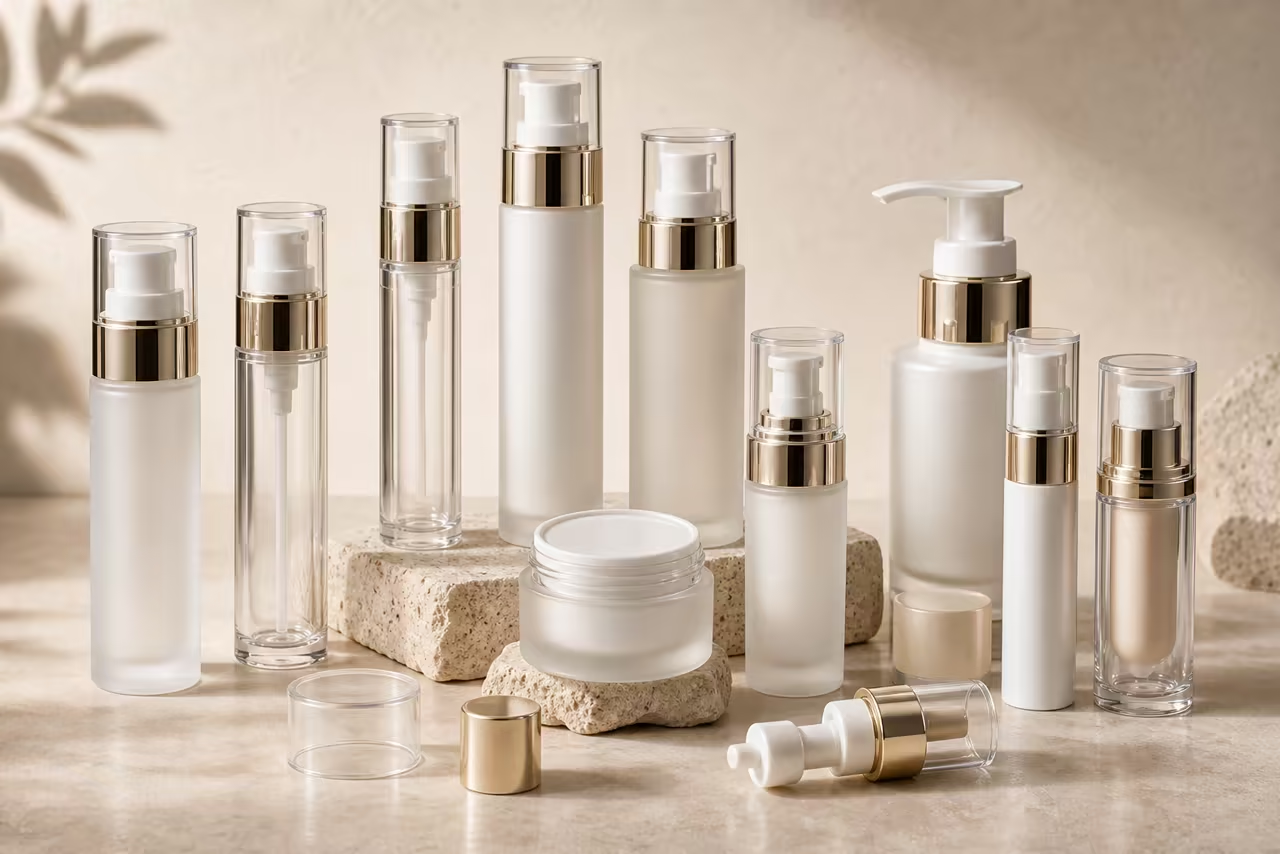
Evaluate the bottle diameter, weight, center of gravity, surface finish and grip zones with dry and wet hands. A tall narrow bottle may look elegant but fall when the user presses its pump. A glossy cap can become difficult to twist after product reaches the surface. Consider whether the pack rolls, tips or requires a second hand simply to stay upright.
Texture can help, but test whether it traps product, interferes with cleaning or creates an uncomfortable pressure point. A heavier pack may feel premium while also increasing fatigue or breakage risk. Record the trade-off rather than treating one feature as universally accessible.
Reduce unnecessary opening complexity
Measure the sequence and force needed to remove an overcap, break a seal, find the thread start and close the package correctly. Fine alignment, strong pinch force and simultaneous push-and-twist actions can create barriers. Clear feedback—a visible position, tactile stop or audible click—can help users know whether the pack is open, locked or sealed.
Safety and tamper features may require deliberate resistance. The design task is to meet the actual safety and market requirements while avoiding extra force or hidden actions that add no protection. Evaluate the full production-intent closure after decoration and repeated use.
Design dispensing around force and control
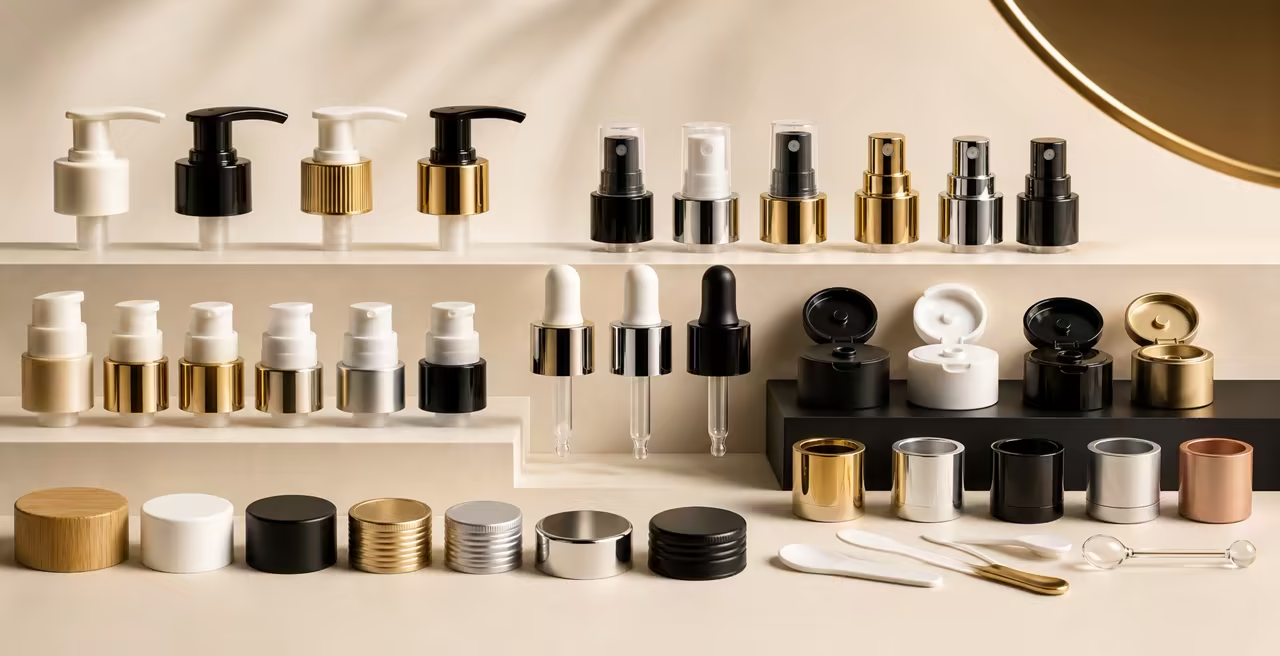
A broad pump actuator can distribute force, but its stroke, output and bottle stability still need testing. Ask users to dispense a small and a full dose without chasing a moving bottle, overspraying or placing a hand under an unclear outlet. For droppers, consider bulb force, cap opening, pipette visibility and dose markings. For jars, review lid grip, direct access and whether an applicator can be stored and cleaned.
Measure actuator force and output with the actual formula at relevant temperatures. A package that works with water during a design review may become difficult with a viscous cream or after product dries around the nozzle.
Show remaining product honestly
Opaque and airless packs can make it hard to know when to reorder or whether a pump has stopped early. If formula protection permits, compare a window, translucent area, visible piston, weight cue or usage indicator. Test whether the signal works for users with low vision and across the product colors planned for the range.
For refill systems, make cartridge orientation, opening, transfer and lock confirmation clear. A refill that requires strong grip, precise alignment or multiple loose components may shift effort rather than remove it.
Evaluate with people, then freeze the record
Use a diverse group of intended users and realistic filled samples. Observe errors and recovery rather than coaching participants through the correct action. Record completion, force, time, spills, dose control, comments and any workaround. Retest after changes to resin, coating, closure, formula or decoration, because each can alter grip, visibility or force.
The approval record should define the bottle, closure, actuator, output, opening and closing action, visual and tactile cues, label version and evaluation conditions. That turns an accessibility intention into requirements that sourcing, engineering and quality teams can protect on repeat orders.
Accessible cosmetic packaging review checklist
Evaluate the complete use sequence with a diverse group of intended users. A feature that helps one action can create a new problem elsewhere in the pack lifecycle.
| Use stage | Questions to test | Possible design directions |
|---|---|---|
| Identify | Can users distinguish the product, variant, opening direction and dose without relying on small low-contrast text alone? | Clear hierarchy, contrast, tactile or shape cues, legible labels and consistent family coding. |
| Grip and stabilize | Can the pack be held when hands are wet, slippery, painful or have limited strength or reach? | Stable base, useful diameter, textured grip zones, controlled weight and shapes that resist rolling. |
| Open and close | What force, pinch, twist, alignment and two-handed coordination does the closure require? | Larger contact surfaces, clear start and stop feedback, fewer fine-motor actions and a closure that remains easy after repeated use. |
| Dispense | Can the user control the dose without excessive force, overspray or an unstable pack? | Broad actuator, suitable output, one-handed stability, predictable return and visible dispensing point. |
| See remaining product | Can users tell when a reorder is needed or whether the pump has stopped early? | Window, level indicator, translucent area, weight cue or an honest usage signal compatible with formula protection. |
| Refill or dispose | Can parts be separated, refilled or sorted without hidden tools, sharp edges or ambiguous instructions? | Simple component path, durable instructions, intuitive alignment and realistic destination-market disposal guidance. |
Selection considerations
Translate broad accessibility goals into measurable user actions: identify, grip, open, close, dispense, read, clean, refill and discard. Observe people using realistic filled packs in the intended environment, because dry tabletop trials can miss slippery surfaces, fatigue, limited reach and error-recovery problems.
Questions to resolve before sampling
- Which intended users and real use environments, including wet bathrooms or travel, will be included in evaluation?
- Which actions require pinch strength, twisting, fine alignment, two hands, strong vision or color discrimination?
- Can the team measure opening force, actuator force, dose control, error recovery and repeated-use performance with production-intent samples?
What to send with an inquiry
Share the application or formula, capacity, material preference, closure or dispensing component, decoration, estimated quantity, destination country, target timing and any reference drawings or photos. Final specifications, MOQ, availability and testing requirements are confirmed for the selected configuration.
Primary references and scope
- ISO 11156 packaging accessible-design overview — Provides a framework for packages that more people can identify, handle, use, separate and dispose of.
- FDA summary of cosmetics labeling requirements — Summarizes U.S. labeling responsibilities and adulteration or misbranding considerations.
- FDA microbiological safety and cosmetics — Explains contamination risks, including packaging that does not adequately protect a cosmetic product.
ISO 11156 provides a general accessible-design framework and does not prescribe dimensions, materials or evaluation methods for a specific cosmetic pack. Accessibility, safety, labeling and contamination controls must be evaluated for the actual users, formula, package and destination market.