
Sunscreen Tube & Stick Packaging Guide
Compare tube, stick, pump and sample routes by finished formula, rheology, filling, target dose, barrier brief, label area, stability and distribution evidence.
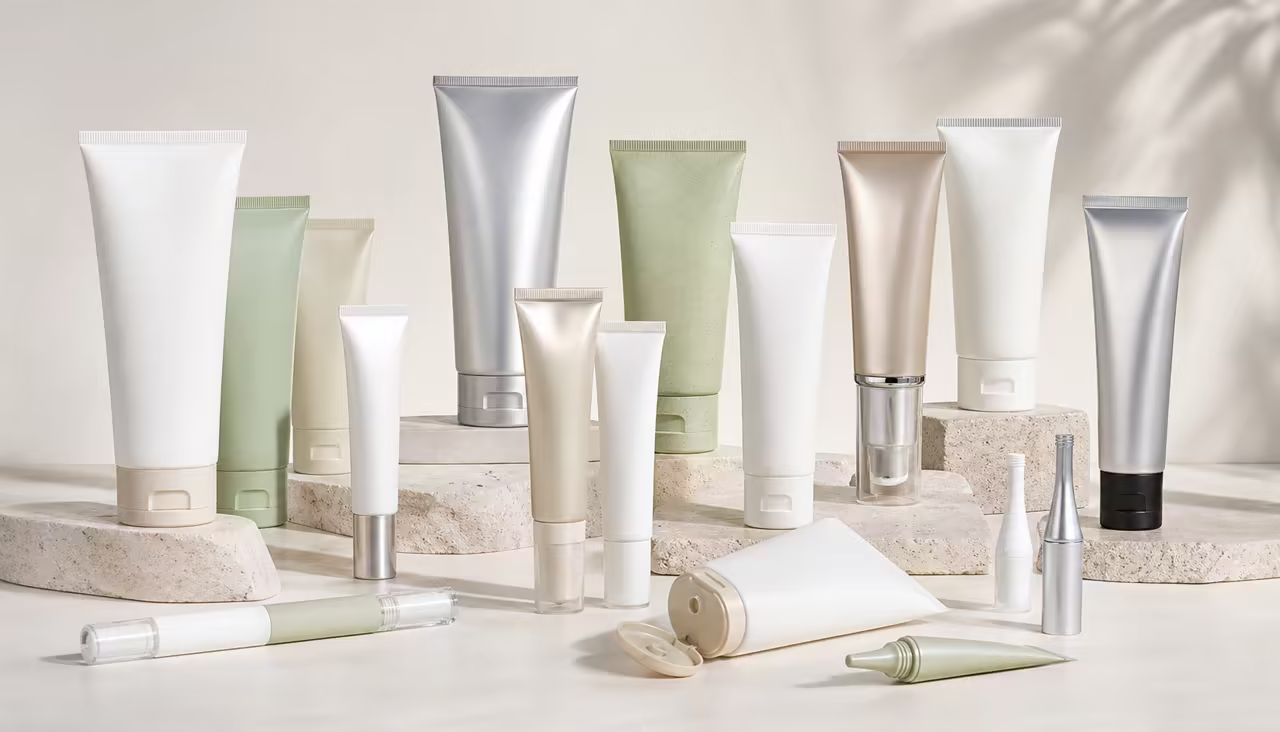
How should a buyer choose sunscreen packaging?
Choose sunscreen packaging from the finished formula, rheology, fill process, application task, target dose, barrier brief, label area and destination-market requirements. Compare tube, stick, pump and sample formats, then evaluate the exact production-intent package for compatibility, filling, seal integrity, dispensing, decoration, intended heat and distribution conditions, and stability. A material or mechanism category alone does not preserve or prove the product's SPF performance.
Compare complete container-closure systems
No route is automatically correct for every sunscreen. Define the complete system and approval protocol before treating a catalog format as a production candidate.
| Application route | Candidate format | Define before sampling | Verify before approval |
|---|---|---|---|
| Squeeze application | Cosmetic tube system | Tube construction, shoulder, orifice, closure, fill process, crimp method and barrier target | Formula contact, filling, crimp and seal integrity, dispensing, decoration and stability |
| Solid application | Personal-care stick system | Formula set and rheology, platform or cup, cover, mechanism and cap | Propel-repel operation, formula contact, intended heat and storage conditions, and cap retention |
| Pump application | Pump or airless candidate | Viscosity, fill method, pump engine, target output and evacuation target | Filling, priming, output consistency, evacuation, leakage and formula compatibility |
| Trial or single use | Sample package | Use count, target fill, seal design, usable label area and any outer pack | Seal integrity, delivered dose, filling fit, label legibility and distribution performance |
| Transfer or refill | Candidate only after qualification | Exact receiving pack, responsible formulation and regulatory teams, full label and stability plan | The intended sunscreen in the exact proposed pack under the defined protocol |
Route-specific pages
Cosmetic tube systemsPersonal-care and stick packagingAirless pump candidatesSample packaging formatsDefine before sampling
- Finished formula, rheology and known sensitivities.
- Fill volume, temperature, method and filling-line constraints.
- Application task, target output or use count.
- Barrier, heat, storage and distribution brief.
- Usable label area, required Drug Facts panel and decoration.
- Destination, quantity and the buyer's approval protocol.
Build a sunscreen packaging RFQ
Send enough input to compare feasible routes and identify open verification work. MOQ, sample availability, tooling and timing remain conditional until the exact specification is reviewed.
- Formula
Rheology and known sensitivities - Filling
Volume, temperature and method - Application
Use task and target dose - Protection
Barrier, label and storage brief - Program
Quantity, destination and timing
Compatibility and stability
Use the actual formula, intended package components and defined storage conditions. Observe changes against the responsible team's acceptance criteria.
Filling and dispensing
Verify filling fit, seals, output, priming or squeeze behavior, leakage and package operation on production-intent samples.
Claims and evidence
Keep recycled content, barrier, dose, SPF and destination-market claims tied to the exact specification and evidence reviewed by the responsible teams.
U.S. sunscreen packaging context
FDA regulates sunscreens in the United States as nonprescription drugs, and OTC drug products use standardized Drug Facts labeling. Confirm final label content and usable panel area with the responsible regulatory team; an empty-container drawing is not an approved product label.
FDA consumer guidance also explains that sunscreen labels direct users to protect the product from excessive heat and direct sun. Treat intended heat, storage and distribution conditions as inputs to the finished product/package evaluation, not as performance claims for an untested container.
Primary sources reviewed August 28, 2026: FDA sunscreen guidance and FDA OTC Drug Facts label. Requirements for other markets should be checked with the responsible local regulatory team.
Sunscreen packaging questions
How should a buyer choose sunscreen packaging?
Start with the finished formula, rheology, fill process, application task, target dose, barrier brief, label area and destination-market requirements. Compare tube, stick, pump and sample routes, then test the exact production-intent package for compatibility, filling, sealing, dispensing, decoration, intended heat and distribution conditions, and stability.
Does a tube, stick or pump preserve or prove SPF performance?
No. SPF is a performance claim for the finished sunscreen product, not an automatic property of a tube, stick or pump. A packaging change can alter contact materials, exposure, dispensing, label space or stability conditions. The responsible formulation and regulatory teams should approve the exact production-intent container-closure system and supporting protocol.
What is the U.S. labeling context for sunscreen packaging?
FDA regulates sunscreens in the United States as nonprescription drugs, and OTC drug products use standardized Drug Facts labeling. Confirm the final label content and usable panel area with the responsible regulatory team; the packaging supplier should not infer an approved label from an empty-container drawing.
Can sunscreen be transferred to another container?
Do not assume an unqualified replacement container preserves the original sunscreen's protection, stability, dosing or labeling conditions. For a commercial launch, refill or travel format, evaluate the finished product in the exact proposed container-closure system and follow the responsible formulation, filling and destination-market regulatory process.